
Meet the Bellevue & Thompson Families: Hand-Sewn Doll Families

A dollhouse becomes a home when somebody moves in.
Rooms can be furnished, beds can be made and a miniature table can be set for dinner, but characters are what turn those details into stories.
That is the idea behind every Little Forest Animals doll family.
The Bellevue and Thompson Families are hand-sewn animal characters designed to move naturally between our miniature houses and the stories children create inside them. Their clothing, scale and tactile construction give each family a visual identity without deciding their personalities in advance.
Who cooks breakfast? Who stays awake after bedtime? Who owns the flower shop? Who is always late?
Those decisions belong to the child.
Why We Created Families for Our Houses
Architecture creates the setting. Characters create the reason to move through it.
When a family enters a dollhouse, the staircase has a destination. The kitchen has somebody to cook for. A bedroom belongs to someone. A shop can suddenly open for the day.
This is why Little Forest Animals' animal characters are designed as more than accessories to a house.
They are recurring inhabitants of the miniature world.
Meet the characters ready to bring your miniature world to life in our Dolls Collection.
Meet the Bellevue Family
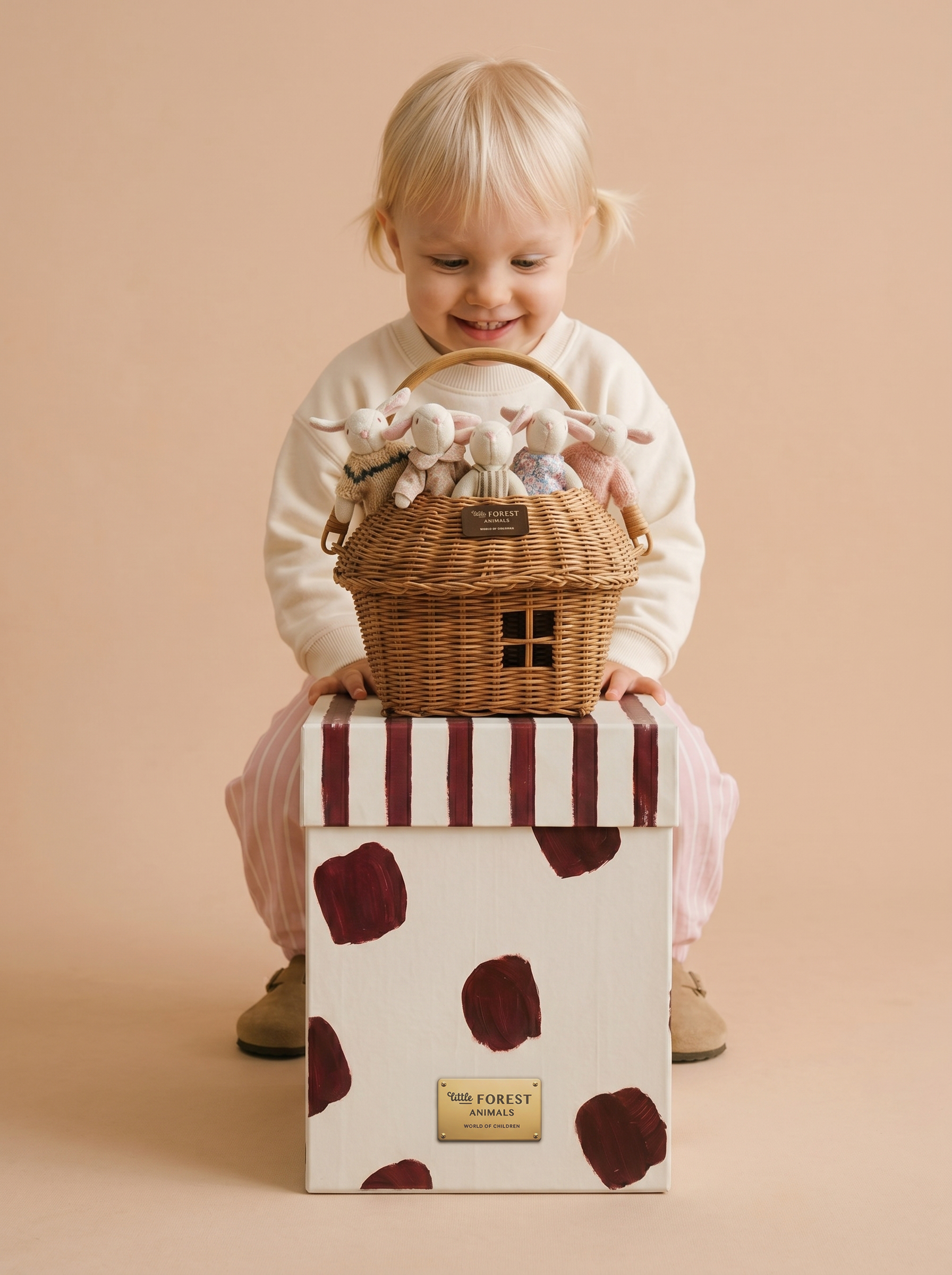
The Bellevue Family brings together five hand-sewn animal characters as one household.
Current Little Forest Animals product information describes the Bellevue characters as made from 100% organic cotton and individually hand-sewn, with heights of approximately 13–15 cm. The family is presented together in an organic rattan basket inside a premium gift box.
Their scale allows them to sit naturally within the Little Forest Animals world while remaining substantial enough to hold, dress and carry outside the house.
What the Bellevue Family does not arrive with is a fixed script.
A child can decide the relationships, routines and personalities that make the family their own.
Meet the Bellevue Family and discover the characters waiting for their next story.
Meet the Thompson Family
The Thompson Family expands the Little Forest Animals world with another household and another starting point for storytelling.
Like the Bellevue Family, the Thompsons are designed as tactile characters rather than rigidly defined personalities.
Their signature clothing and family presentation give them visual identity, while the stories remain open.
Before publishing, insert the current verified Thompson Family material, member count, dimensions and exact outfit details from the live product page here.
Discover the Thompson Family and give them a place in your own miniature world. 
Why Hand-Sewn Dolls Feel Different
Hand-sewn dolls have a softness that changes the relationship between character and architecture.
A wooden house provides lines, rooms and structure. Textile characters introduce fabric, movement and touch.
Small differences created through hand-sewing can also give characters a less industrial feeling than perfectly identical moulded figures.
That does not mean handmade should be used as a vague quality claim. Materials, construction and care information should be stated specifically wherever possible.
For the Bellevue Family, Little Forest Animals currently specifies 100% organic cotton and hand-sewn construction.
Organic Cotton and Tactile Play
Material matters especially for characters that are repeatedly held.
Organic cotton gives the Bellevue Family a soft textile surface that contrasts with the architectural materials of the dollhouse.
This creates a useful visual and tactile relationship: the house is the structure; the family brings softness and movement.
When discussing organic cotton, keep the claim tied to products for which the current specification confirms it rather than assuming every character collection uses identical materials.
Signature Outfits Give a Family Its Visual Language
Clothing is one of the fastest ways to make miniature characters feel distinct.
Pyjamas can suggest bedtime. A carefully tailored daytime outfit can make a character feel ready to leave the house. Coordinated fabrics can make separate figures immediately read as a family.
Little Forest Animals uses clothing as part of the visual identity of its animal families.
The outfits suggest a world without closing it.
They are costumes for stories that have not happened yet.
A Doll Family Without a Fixed Biography
Children's characters are often introduced with complete personalities: names, favourite foods, occupations, catchphrases and predetermined adventures.
There can be pleasure in that kind of storytelling.
But an open-ended doll family offers something different.
If a character arrives without every detail decided, the child has more narrative space. The same figure can become a parent, neighbour, shopkeeper, teacher, traveller or something entirely invented.
The object provides the character.
The child provides the biography.
Pairing Dollhouse Families With Different Houses
The Bellevue and Thompson Families are designed to travel through the wider Little Forest Animals world.
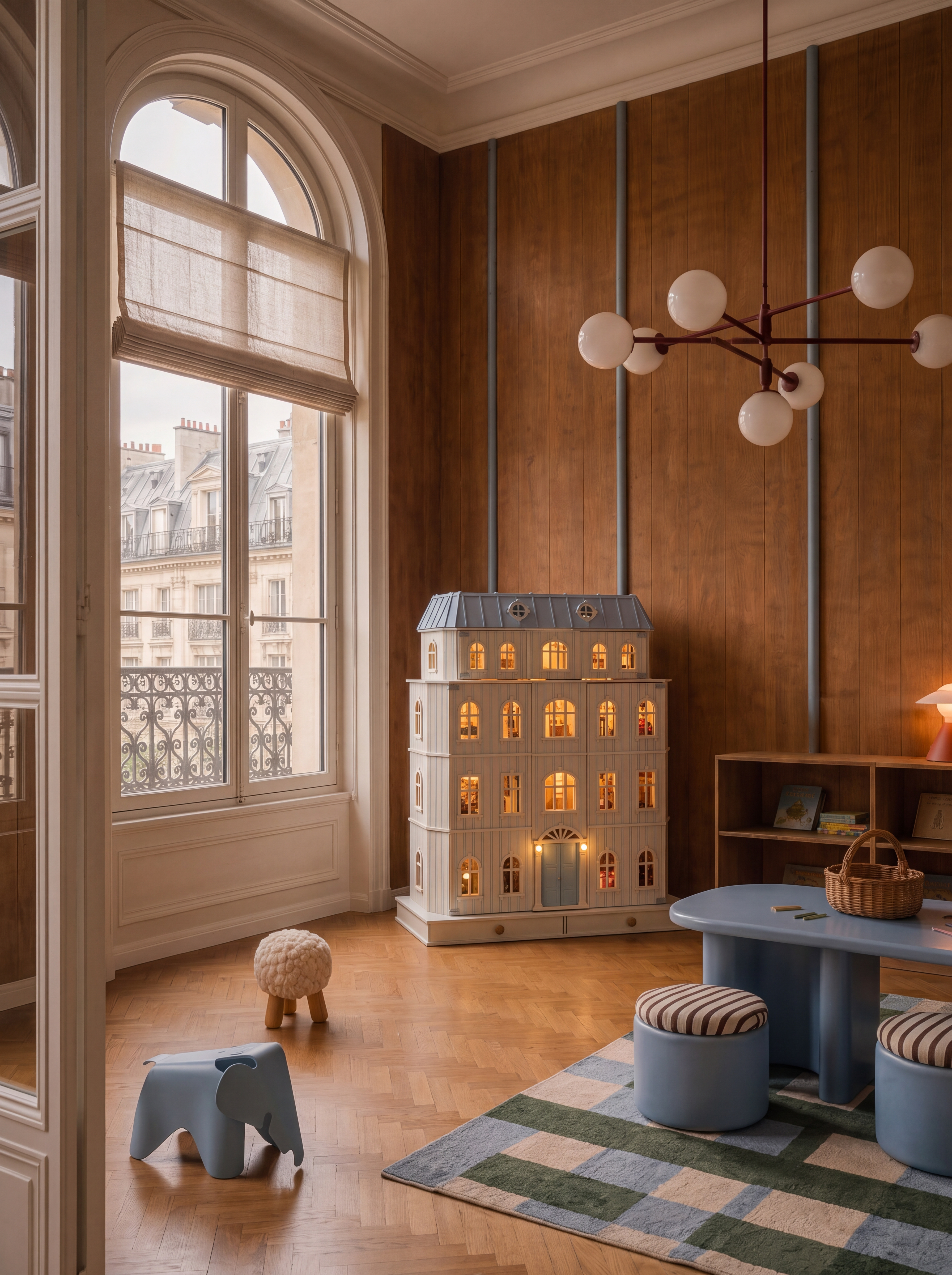
A family can live in Paris one week and New York the next. They can move into London, visit Monaco or appear inside a smaller miniature setting.
This is where a connected collection becomes useful: houses provide different architecture while the same characters can carry a story between them.
Let the family move from one miniature city to another — explore the House of Paris.
 Give their next story a New York address with the House of New York.
Create a new chapter in London with the House of London. 
Or take the family to Monaco for an entirely new setting.
How Characters Change the Scale of a Dollhouse
Furniture alone tells us that a room is miniature.
A figure tells us how miniature it is.
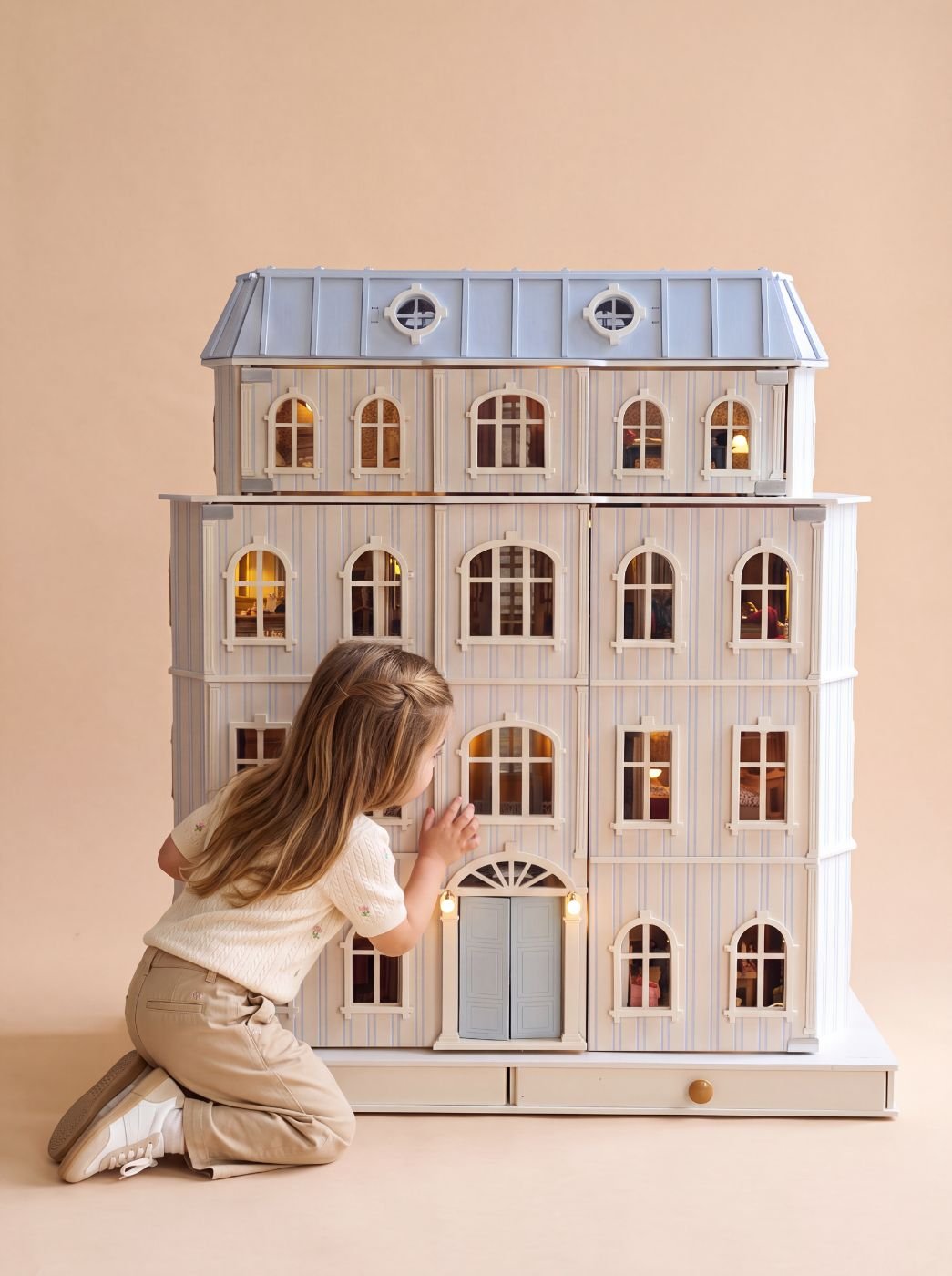
Place a character beside a doorway and the architecture immediately gains human — or in this case, animal — scale. A chair becomes something to sit on. A bed becomes somewhere to sleep.
This relationship between character, furniture and architecture is why scale compatibility matters when choosing dollhouse families.
Before mixing collections from different brands, compare figure heights and room dimensions rather than assuming all miniature products share the same scale.
Family Dolls as a Starting Point for Imaginative Play
A family structure gives children an immediate set of relationships to work with.
Some stories may reproduce everyday routines. Others may have almost nothing to do with ordinary family life.
The value is in the flexibility.
A set of family dolls can support conversation, role play and storytelling without requiring one correct sequence of events.
It is better to describe these as opportunities created by play rather than promise specific developmental outcomes.
Collectible Dolls That Do Not Need to Stay on a Shelf
Collectible dolls are sometimes treated as objects that should remain untouched.
Little Forest Animals' characters are conceived differently.
They can be visually detailed enough to collect and display while still belonging inside active miniature play.
That dual role can extend their life. A character may be carried everywhere at four, live permanently in a dollhouse at eight and sit on a shelf much later.
Collectibility does not have to mean removing an object from childhood.
A Family Can Grow Over Time
Miniature collections are especially suited to gradual gifting.
A child may begin with one family and one house. Grand family can arrive on a later birthday. A new house introduces a different setting without making the original characters obsolete.
This creates continuity between gifts.
Instead of replacing one toy with another, the miniature world expands.
Continue building their miniature world with more characters from the Collection. 
Why Doll Families?
Anthropomorphic animals occupy a useful space between familiar and imaginary.
They can wear clothes, sleep in beds and live in houses while remaining clearly part of a fictional world.
That distance gives children freedom.
A rabbit family does not have to resemble the child's own family. A bear does not need to behave like anybody the child knows.
The characters can borrow from real life without becoming a direct copy of it.
From Dollhouse Accessory to Keepsake
A well-loved character often outlives the exact play scenario it was bought for.
Textile dolls can become familiar objects in their own right. Their clothing, softness and evidence of use can accumulate sentimental value over time.
A family that begins as inhabitants of a dollhouse may eventually be stored carefully, displayed or passed to another child.
That possibility is part of why material and making matter.
An heirloom cannot be guaranteed.
But it can be designed with enough care to have the opportunity to become one.
How to Choose a Doll Family
Start with scale. Check that the characters fit comfortably inside the intended house and furniture.
Then consider material and care. Textile characters and hard-bodied miniature dolls behave differently in play and need different maintenance.
Look at whether the family is sold as a complete household or individual characters, and whether clothing is removable or fixed according to the current product specification.
Finally, choose characters the child has room to interpret.
The best doll family is not necessarily the one with the longest biography.
It may be the one that leaves the most room for a new one.
Two Families, Thousands of Stories
The Bellevue and Thompson Families begin as finished objects.
Their stories do not.
Once they enter a house, everything can change. They can move rooms, change cities, visit each other, open shops, celebrate birthdays or spend an entire afternoon doing something no adult would have thought to write for them.
That is the pleasure of a miniature family.
The sewing creates the character.
The architecture creates the world.
The child connects the two.
FAQ: Doll Families & Hand-Sewn Dolls
What is a doll family?
A doll family is a group of miniature or child-sized characters presented as a household or related set. In dollhouse play, family dolls provide recurring characters that can move through rooms and stories.
What are the Bellevue Family dolls made from?
Current Little Forest Animals product information describes the Bellevue Family as hand-sewn from 100% organic cotton. Confirm the live product specification before publication or purchase.
Can dollhouse families be used without a dollhouse?
Yes. Textile family dolls can support standalone imaginative play as characters even when no dollhouse is present.
How do I know whether dolls will fit a dollhouse?
Compare the figure height with the house's room, doorway and furniture dimensions. Do not assume all dollhouses and dolls use the same miniature scale.
Are hand-sewn dolls collectible?
They can be. Hand-sewn characters may appeal both as play objects and as collectible or display pieces, particularly when materials, clothing and craftsmanship give the family a distinctive visual identity.
Which Little Forest Animals houses can the families pair with?
The families are designed to belong within the wider Little Forest Animals world.