
Article: Role-Playing as a New Way of Learning. Or Is It?
Role-Playing as a New Way of Learning. Or Is It?
Is role-playing really a new way of learning?
Or is it something we've known all along, without giving it much thought?
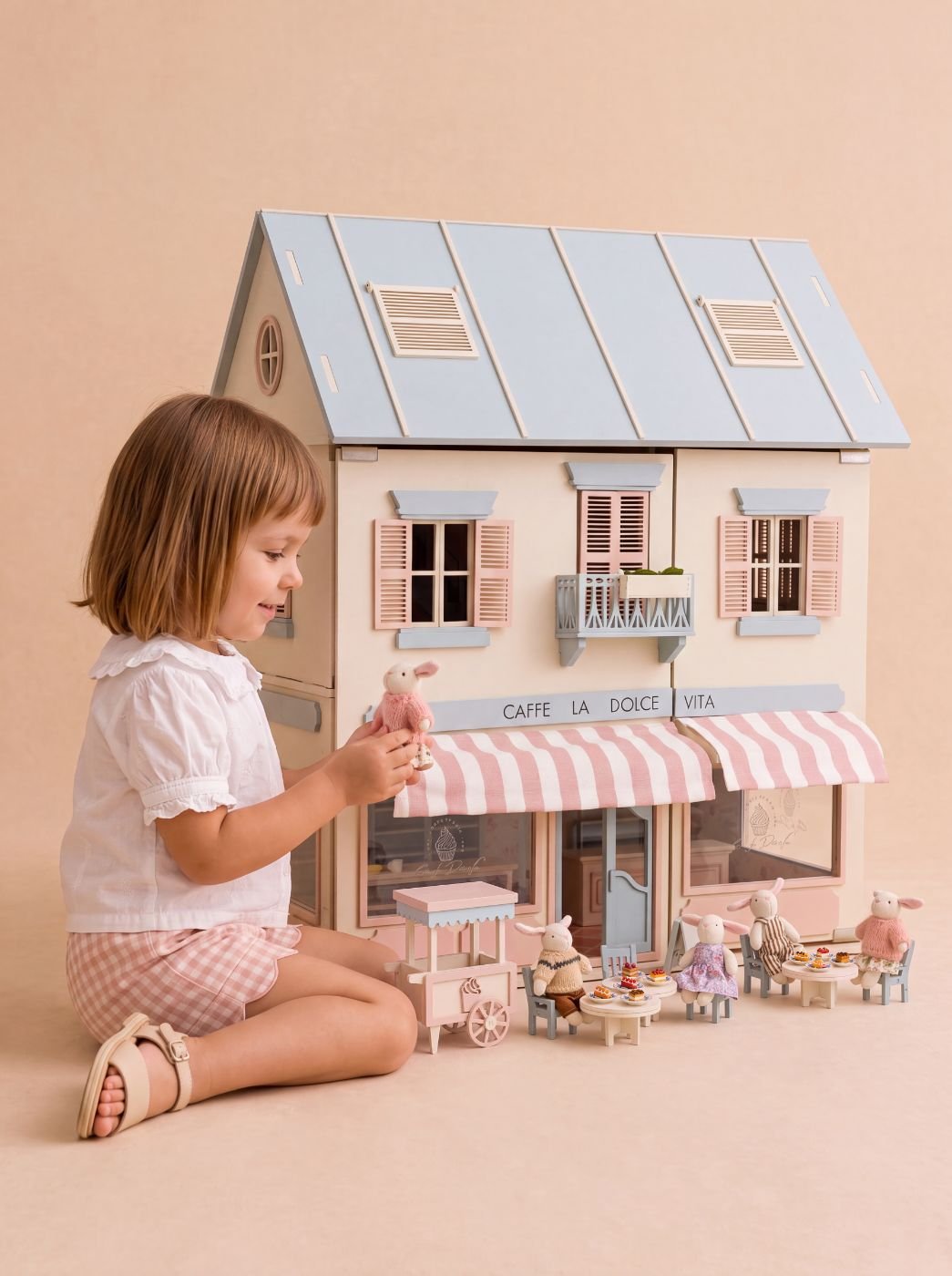
We've been thinking about this lately, particularly when it comes to three-year-olds and dollhouses.
Because it seems we're constantly looking for new ways to help children learn.
New methods. New activities. New educational toys. Books. And more books.
And perhaps, sometimes, we're looking for the answer in the wrong place.
Haven't We Always Learned This Way?
Think about it.
Before an important conversation, don't you sometimes imagine how it might go?
Before doing something unfamiliar, don't you picture yourself doing it?
And when something doesn't go quite as planned, don't you occasionally replay the whole thing in your head, imagining what you could have said differently?
We do. Quite often, actually. :)
We call it preparing, thinking things through, or simply trying to figure something out.
Now think about a three-year-old.
They've only had three years to observe this rather complicated world. There's so much they haven't experienced yet, so much they don't understand, and so much they have no control over.
So what do they do?
They play.
At Three, They Don't Know They're Learning. They're Just Playing.
Around the age of three, pretend play becomes increasingly elaborate for many children.
They begin taking on familiar roles, using objects to represent other things, and connecting everyday experiences to imaginary situations.
And the interesting part?
Nobody has to explain the concept of role-playing to them.
It comes naturally.
Developmental researchers call part of this symbolic play. The American Academy of Pediatrics also recognises play as an important part of children's language, social, emotional and cognitive development.
So while a three-year-old might simply be pretending to make dinner, they're also getting opportunities to use language, explore relationships and make sense of familiar experiences.
Not every game teaches something specific, of course.
But isn't it interesting that something so natural can offer so many opportunities to learn?
 What Does a Dollhouse Have to Do with It?
We've always loved the idea of giving children a little world of their own.
And for a three-year-old, a dollhouse can offer something particularly interesting: a connection between the world they know and the world they imagine.
It's a familiar environment, only smaller.
A kitchen, a bedroom, a living room, and little characters who can become anyone they want.
Children can recreate something they've experienced, explore a situation they're curious about, or simply decide what happens next.
The real world gives them the inspiration. Their imagination takes it somewhere else.
And the dollhouse gives that imagination a place to play.
Of course, every three-year-old plays differently. Some create little stories, while others prefer repeating familiar routines. Any dollhouse and its accessories should also be appropriate for the child's age and safety needs.
The point isn't to teach them how to play correctly.
It's to give them the freedom to discover what they can do.
Are We Making Learning More Complicated Than It Needs to Be?
Perhaps that's what we've really been wondering.
We spend so much time thinking about what children should learn and how we should teach them.
And meanwhile, they're already exploring the world through watching, imagining, pretending and playing.
We're not suggesting that books, educational activities or structured learning aren't important.
Of course they are.
But perhaps we sometimes overlook something that's already happening naturally.
So, is role-playing a new learning method for three-year-olds?
Not really.
It's a familiar part of early childhood development, and something children have been doing long before we started giving it educational names.
And maybe the interesting question isn't how we can teach three-year-olds through play.
It's why we ever started thinking of playing and learning as two separate things.


Leave a comment
This site is protected by hCaptcha and the hCaptcha Privacy Policy and Terms of Service apply.