
Children's Room Design Trends 26'
Children's rooms are becoming less interested in looking temporarily 'childlike' and more interested in becoming real interiors.
In 2026, the strongest children's room trends borrow from the wider design world: richer colour, tactile natural materials, rooms with personality, objects that look collected rather than instantly coordinated, and a growing resistance to decor designed to be replaced after one short phase.
That does not mean nurseries are becoming miniature adult living rooms.
It means parents and designers are increasingly asking a more useful question: can this room delight a child now without needing to be completely redesigned two years later?
The result is a more layered approach to kids' rooms — one where play, practicality and serious design can occupy the same space.
1. The End of the All-Beige Children's Room
For several years, children's interiors were dominated by soft beige, cream, pale timber and restrained neutral palettes.
Neutrals are not disappearing in 2026, but they are losing their monopoly.
Architectural Digest's 2026 forecast describes a broader interiors shift toward self-expression, saturated shades, eclecticism and layered colour. ELLE Decor similarly reports that sophisticated rooms in 2026 are becoming more personal and intentional rather than simply styled.
In children's rooms, that translates naturally into colour with more character: dusty reds, deep blues, tobacco and ochre accents, muted greens, powder pinks, burgundy details and warm painted woodwork.
The key is not maximal colour everywhere. It is moving from 'neutral because it is safe' to a palette chosen because it belongs to the room.
Named style: New Traditional Colour.
2. Texture Becomes the New Luxury
One of the clearest 2026 interiors movements is tactile design.
ELLE Decor describes texture as a defining luxury language, with wool, linen, rattan, velvet and other contrasting surfaces becoming foundational rather than decorative afterthoughts. House & Garden's 2026 WOW!house report likewise identifies texture across both maximalist and minimalist rooms.
For a child's room, texture is especially effective because it can add richness without relying on a theme.
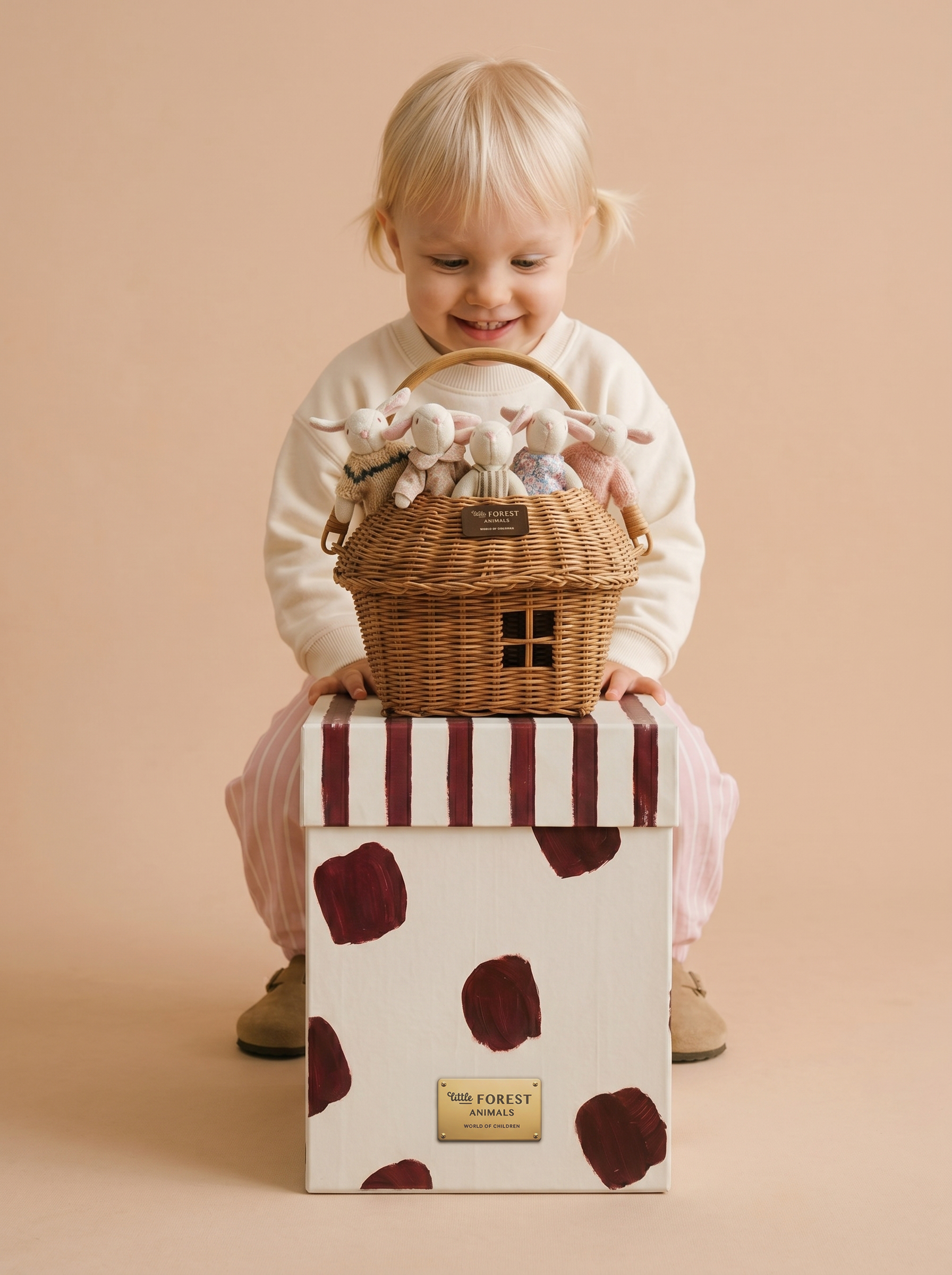
A hand-tufted rug, woven basket, linen curtain, quilted bedspread, timber furniture and soft textile characters can create visual depth even when the palette is quiet.
This is a useful direction for nurseries too: a room can feel warm and detailed before it needs wallpaper covered in a specific character.
Looking to add warmth, texture and character underfoot? Explore The Rug Edit for pieces designed to become part of the room for years to come. 
3. Natural Materials, Used With More Confidence
Natural and raw materials remain important in 2026 interiors, but the look is becoming less formulaic.
Current design reporting points toward wood, wool, linen, stone, plaster, rattan and other tactile materials chosen for character as much as for an idea of simplicity.
In children's rooms, the most successful version mixes rather than matches: painted wood beside natural timber, a wool rug under a more architectural piece of furniture, woven storage next to polished lighting.
The goal is not to create an 'eco aesthetic.'
It is to let materials look and feel like themselves.
Named style: Material-Led Nursery.
4. Heirloom Over Fast Decor
Perhaps the most important 2026 shift is not a colour or motif at all.
It is longevity.
ELLE Decor's reporting on 2026 sustainability trends highlights furniture designed to perform better, last longer and remain repairable. At the same time, designers are increasingly warning against rapidly cycling micro-trends that can make interiors feel dated almost immediately.
For children's rooms, this creates a compelling alternative to fast decor: fewer objects, but objects with a longer visual and practical life.
A well-made rug can move from nursery to bedroom. A substantial wooden piece can become part of the room rather than disappear with the next age phase. A hand-sewn character can move from active play to a shelf.
This is where heirloom design becomes less about nostalgia and more about avoiding unnecessary replacement.
Named style: Heirloom Modern.
5. The Dollhouse as Decor
One of the most natural expressions of the heirloom-room idea is a dollhouse designed to remain visible.
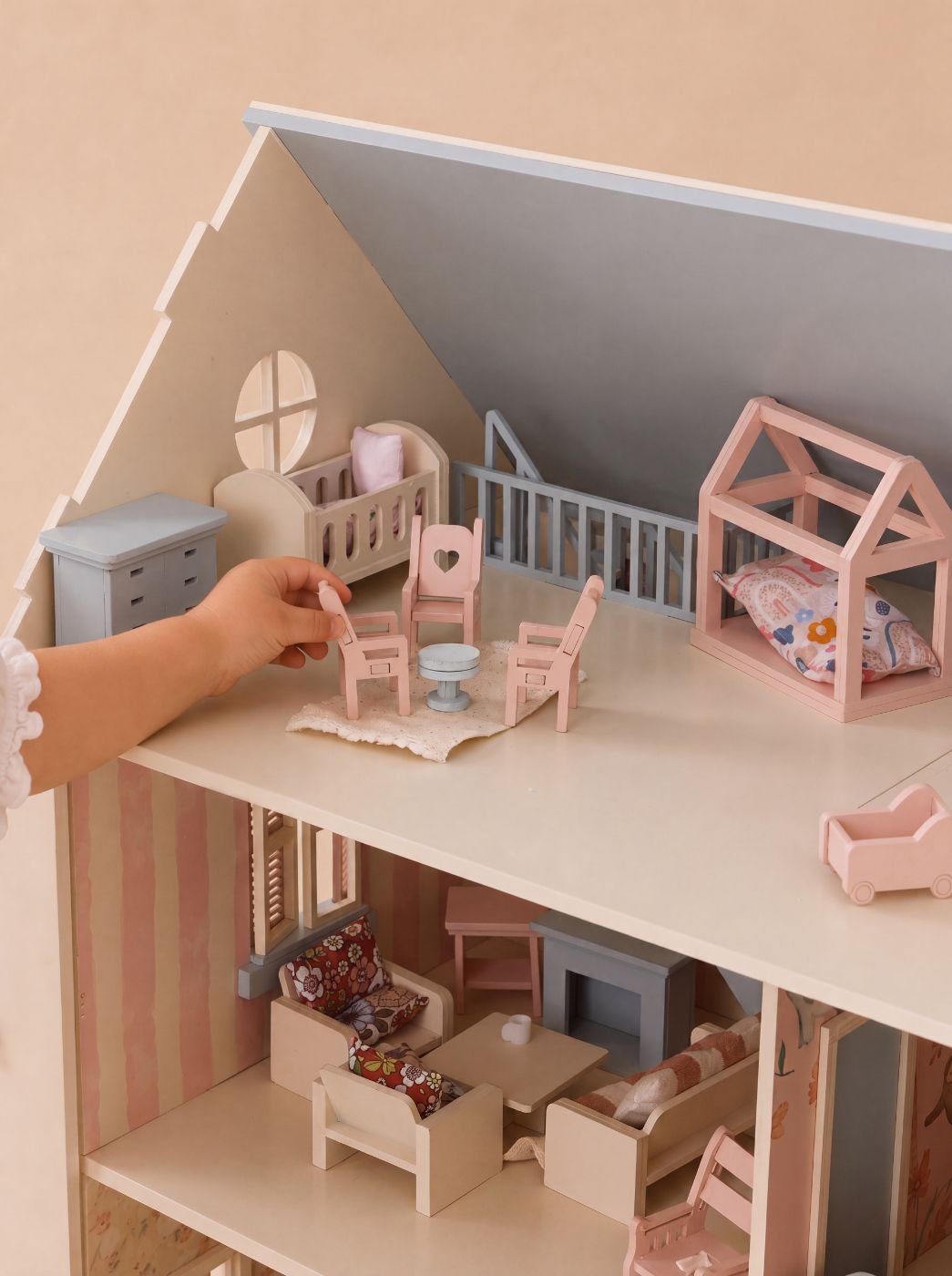
A large architectural dollhouse occupies unusual territory: it is a play object, miniature interior and substantial piece within the room at the same time.
In 2026, as broader interiors move toward personality, storytelling and objects with visual identity, hiding every toy behind closed storage is no longer the only route to a beautiful children's room.
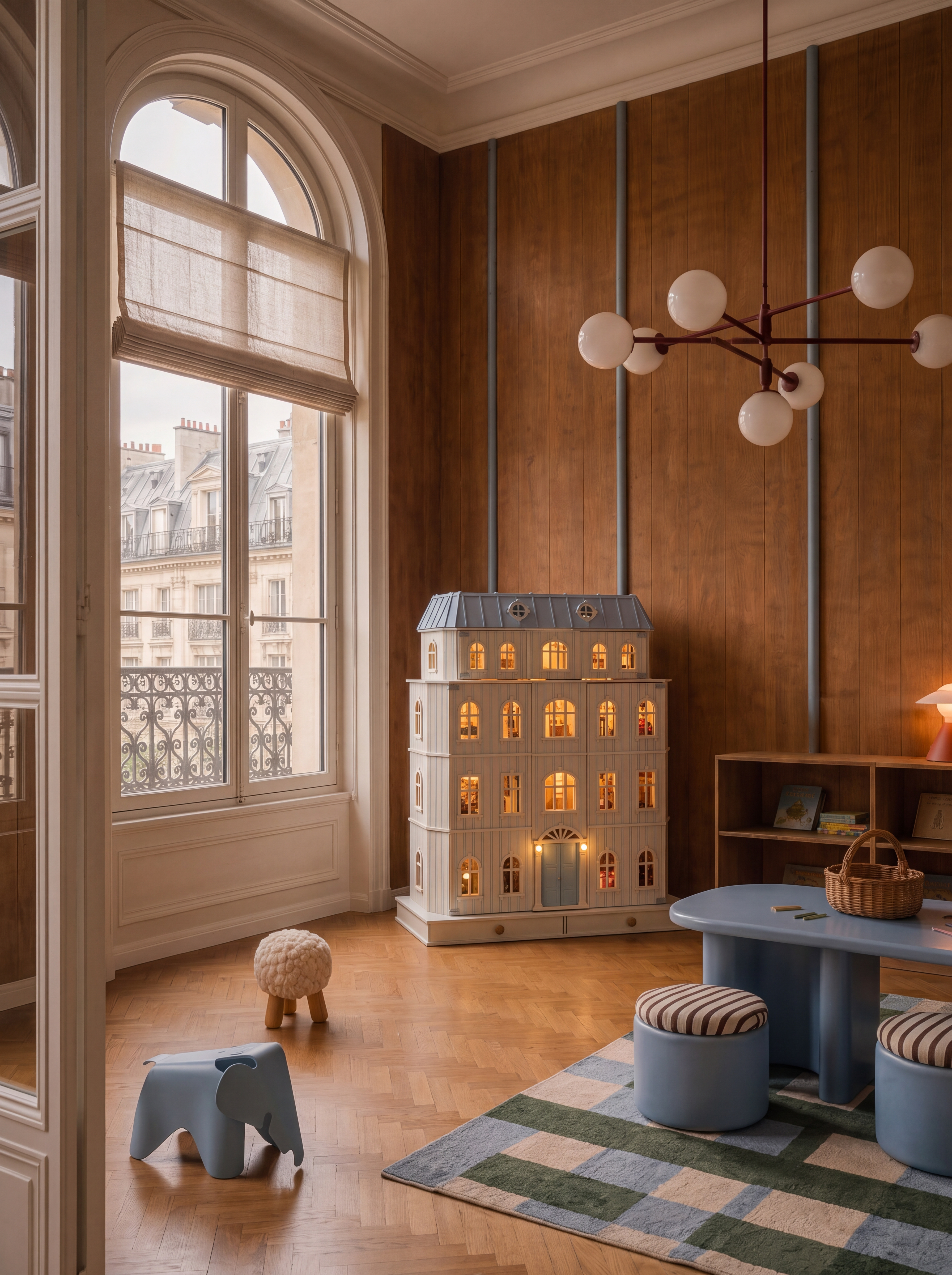
A design-led dollhouse can become part of the composition.
Place it beside a rug rather than inside a toy cupboard. Give it enough space to read architecturally. Allow its facade, roofline and miniature rooms to contribute to the room even when nobody is playing.
This is Little Forest Animals' editorial interpretation of the wider shift toward expressive, storied interiors — and one that aligns naturally with houses designed from architectural references.
Discover our dollhouses designed to be as beautiful in the room as they are engaging in play. 
6. Rooms That Feel Collected, Not Bought in One Afternoon
Perfectly coordinated children's-room sets are giving way to spaces with more evidence of individual choice.
Architectural Digest's 2026 coverage repeatedly points toward storytelling, ornament, historic references and spaces with soul. More recent reporting also notes growing appetite for new interiors that feel storied and established rather than pristine and anonymous.
In a child's room, this can be interpreted through gradual layering.
A vintage-style lamp does not need to match the bed. A new rug can sit beside an inherited chair. Books, miniature objects, art and handmade pieces can arrive at different times.
The room becomes more convincing because not everything looks as though it came from the same collection.
Named style: Collected Childhood.
7. The Return of the Romantic Nursery
Romantic detail is returning to interiors in broader ways: trims, pattern, layered textiles and historical references are appearing again after years of severe minimalism.
For nurseries, this can mean canopy details, delicate florals, checks, stripes, skirted furniture, soft lampshades, decorative edging and painted furniture — but used selectively rather than as a costume set.
House & Garden's 2026 discussion of children's rooms captures the appeal and difficulty of this look: beautiful rooms still need to accommodate the realities of children and their possessions.
The best romantic nursery therefore leaves space for real life.
Named style: Soft English Nursery.
8. Playrooms Become Zoned Rather Than Themed
The strongest playroom trends in 2026 are less about choosing one decorative theme and more about giving different activities a place.
A rug can define imaginative play. Open shelving can hold materials within reach. A table can become the making zone. A substantial dollhouse can anchor a miniature-play area.
This makes the room easier to adapt because the zones can change without replacing the entire decorative scheme.
Visually, zoning also reduces the need for brightly coded children's furniture everywhere. The architecture and textiles can remain coherent while the activities evolve.
Named style: Zoned Playroom.
9. Open Shelving Gets More Curated — But Not Too Perfect
Open shelving remains useful in children's rooms because it can make books, characters and frequently used objects visible and accessible.
But 2026's more lived-in design language suggests moving away from shelves arranged only for photographs.
Mix practical storage with objects worth seeing. Leave room for the child's own collections. Rotate rather than display everything at once.
A shelfie in a child's room should still look as though a child lives there.
The goal is visual order, not evidence removal.
10. Lighting Becomes Part of the Story
Lighting is increasingly treated as a defining decorative layer across the home rather than a final technical step.
In children's rooms, that means moving beyond one central ceiling light.
A small wall light, shaded bedside lamp, decorative pendant or miniature lighting inside a dollhouse can create layers of illumination and make the room feel different at bedtime than it does during play.
Warm, dimmable and task-appropriate lighting is particularly useful because the room often performs several functions across one day.
Where miniature lighting is used inside a dollhouse, it also turns the house itself into an evening decorative feature.
11. Palettes Become More Tonal and Less Gender-Coded
One of the most useful ways to make a children's room last is to build colour around atmosphere rather than a narrow gender formula.
Think clay with rose, olive with cream, tobacco with powder blue, burgundy with soft pink, or warm timber with deep green.
These palettes can still feel playful, but they are less dependent on a single age or identity cue.
The result is a room that can mature through changes in bedding, art and smaller objects rather than requiring new walls and furniture.
Named style: Tonal Childhood.
12. Children's Rooms Borrow From the Rest of the House
Perhaps the clearest overall direction for 2026 is integration.
Children's rooms no longer need to exist as a separate design universe.
If the rest of the home uses oak, linen, vintage lighting, patterned textiles or collected art, some of that language can continue into the child's room.
This creates visual continuity and can make larger purchases easier to reuse elsewhere later.
A rug does not need to announce that it is a children's rug. A cabinet does not need cartoon handles. A dollhouse can be beautiful enough to stand in a family room.
The child's personality should still be visible.
But the room can belong to the home as well as to childhood.
What Is Going Out in 2026?
Trend reports are most useful when they also identify what is losing momentum.
The first is hyper-restrained beige-on-beige children's styling when neutrality exists only to create a photograph.
The second is fast micro-decor: inexpensive thematic objects purchased in volume to reproduce a social-media look and then replaced when the algorithm moves on.
The third is over-coordination — every textile, basket, wall print and toy belonging to the same visual set.
And finally, the idea that every visible children's object needs to be hidden for a room to feel sophisticated is weakening.
2026's strongest interiors are more comfortable with personality, texture and evidence of life.
How to Use Trends Without Creating a Trend-Led Room
The paradox of a trend article is that the best advice for longevity is not to follow every trend.
Choose one or two directions that already make sense for the family.
If you love colour, introduce a richer palette. If longevity matters, invest in fewer pieces that can change roles. If the room feels flat, add texture through a rug or textile. If a child loves miniature play, let the dollhouse become part of the room rather than treating it as visual clutter.
Then stop.
A child's room should accumulate a story over time.
It should not need a new identity every January.
The 2026 Children's Room in One Sentence
If there is one idea connecting the children's room trends of 2026, it is this:
Design the room for a child, but do not design it to expire with childhood.
Use colour with confidence. Choose tactile materials. Make space for play. Allow beautiful toys to remain visible. Buy fewer objects that are worth keeping.
The most interesting children's interiors this year are not trying to look grown-up.
They are simply being taken seriously as interiors.
FAQ: Children's Room Trends 2026
What are the biggest children's room trends in 2026?
The strongest directions include richer colour, tactile natural materials, heirloom-quality objects, layered and collected styling, zoned playrooms, romantic details and children's objects that can remain visible as part of the interior.
What colours are trending for kids' rooms in 2026?
The wider 2026 interiors market is moving beyond safe neutrals toward richer, more expressive colour. For children's rooms, think muted greens, powder pinks, deeper blues, ochres, clay tones, burgundy accents and warm neutrals used together rather than one flat beige scheme.
What are the nursery trends for 2026?
Nurseries are becoming more tactile and less theme-dependent, with natural materials, layered textiles, romantic details, tonal palettes and pieces selected for use beyond the baby stage.
What are the playroom trends for 2026?
Zoning is a useful direction: rugs define play areas, open shelving keeps materials accessible, and larger objects such as dollhouses can anchor dedicated imaginative-play spaces.
Is neutral nursery decor going out of style?
Neutral palettes are not disappearing, but broader 2026 design reporting shows stronger interest in colour, texture and personality. A neutral room can still feel current when it uses material contrast and meaningful objects rather than relying on beige alone.
How can I make a child's room look timeless?
Use durable materials, avoid building the entire room around a short-lived theme, choose larger pieces that can change roles, and allow smaller elements such as bedding, art and accessories to carry age-specific interests.
Can a dollhouse be used as room decor?
Yes. A design-led architectural dollhouse can function as a permanent room feature as well as a play object, especially when its scale, facade and materials relate to the wider interior.
Research Sources & Editorial Grounding
-
Architectural Digest / AD PRO, 'Interior Design Forecast 2026' (Nov. 18, 2025): self-expression, saturated colour, eclecticism, textured layers, storytelling and heirloom-quality craft.
-
ELLE Decor, '3 Interior Design Trends to Know for 2026' (2025): texture as a major luxury language, including wool, linen, rattan and layered tactile materials.
-
House & Garden, 'Seven trends to have on your radar after this year's WOW!house' (June 16, 2026): cocooning colour, sumptuous fabrics and texture across design styles.
-
House & Garden, 'Can a child's bedroom ever be both chic and practical?' (Mar. 5, 2026): the tension between editorial children's-room styling and practical family life.
-
ELLE Decor, 'The Top Eco-Friendly Home Trends Clients Are Requesting in 2026' (Jan. 12, 2026): longevity, repairability and furniture intended to last.
-
ELLE Decor, 'The Micro-Trends Designers Say You Should Avoid in 2026' (June 29, 2026): designer resistance to rapidly dated, algorithm-driven micro-trends.
-
Architectural Digest, 'Why New Builds Are Now Designed to Look Like Historic Homes' (July 2026): appetite for authenticity, patina, historic references and interiors that feel storied.