
How to Choose a Dollhouse That Will Last Generations
A dollhouse can be a birthday present, a piece of furniture, a miniature world and — eventually — something a family decides not to give away.
That is why choosing one deserves more thought than simply finding the biggest house within budget.
A good dollhouse buying guide should answer practical questions first: What size dollhouse should you buy? What age is best for a dollhouse? Which materials matter? Should furniture be included? How much room does the house need? And what happens if a component is damaged years later?
If longevity matters, the best choice is not necessarily the house with the longest feature list. It is the one whose materials, scale, architecture, repairability and design still make sense after the first excitement has passed.
Use this guide as a checklist before you buy.
1. Begin With the Child — Not the Dollhouse
The first question is not which house looks best. It is who will use it.
Consider the child's age, the figures they already play with, whether they prefer detailed storytelling or simpler open-ended play, and whether siblings are likely to use the house together.
A three-year-old and a ten-year-old may both enjoy dollhouse play, but they may need very different things from the object.
For younger children, accessibility and appropriately sized components are especially important. Older children may be more interested in architectural detail, complex interiors, styling and longer storylines.
Always follow the current manufacturer's age guidance for the specific model.
Best Dollhouse for a 3-Year-Old
2. What Age Is Best for a Dollhouse?
There is no universal perfect age.
Many children's dollhouses are designed for preschool age and above, but age suitability depends on the dimensions of the house, the size of accessories and the manufacturer's safety guidance.
A useful distinction is between being old enough to use a product safely and being at the age when a particular style of dollhouse is most engaging.
Younger children may enjoy moving characters and furniture through easily accessible rooms. As children grow, role play can become more elaborate and the architecture itself may become part of the interest.
Some detailed dollhouses also retain appeal for teenagers and adults as miniature interiors or collectible design objects.
The best age is therefore partly a safety question and partly an interest question.
3. What Size Dollhouse Should You Buy?
Measure the room before you fall in love with the house.
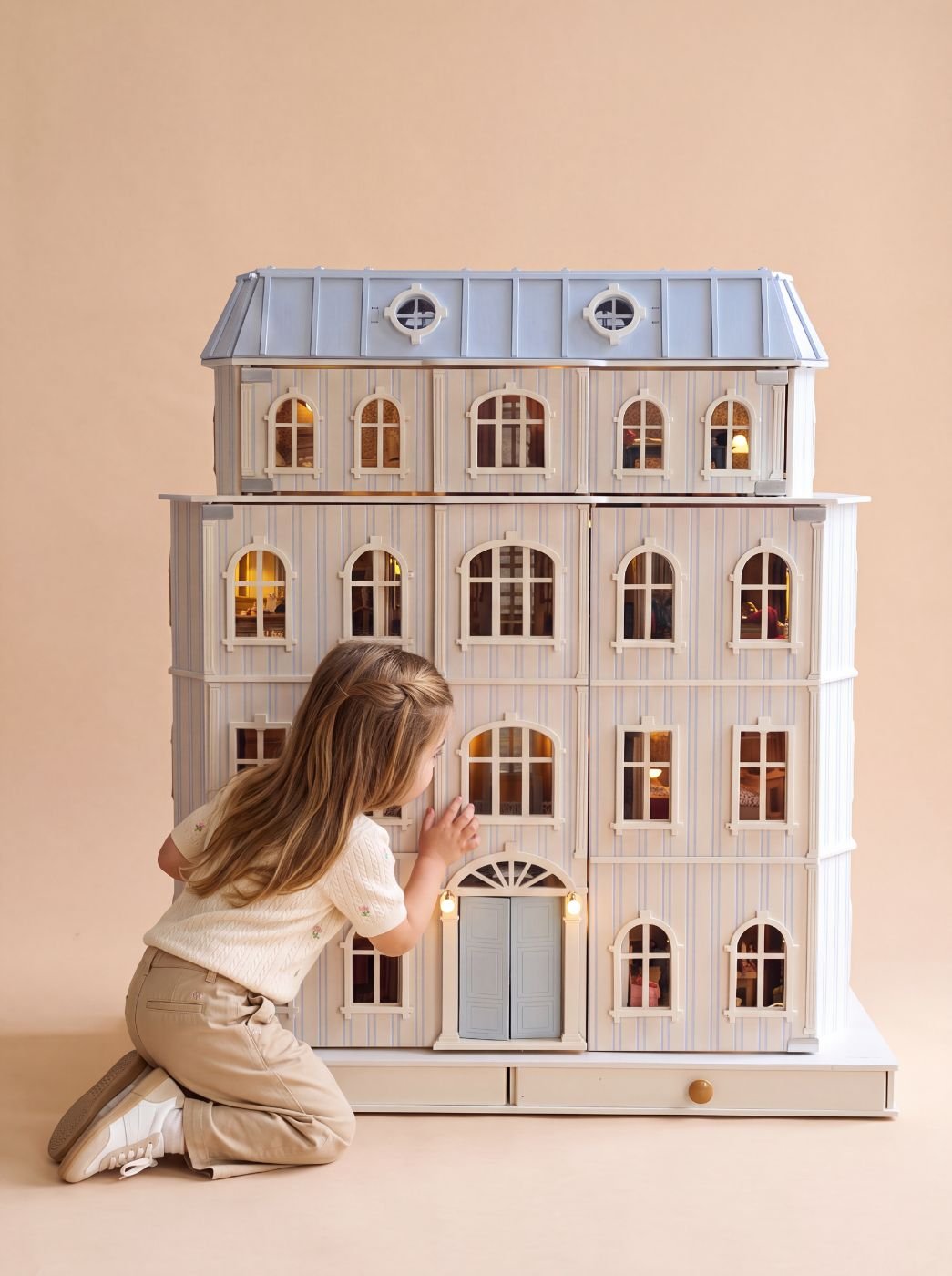
Large dollhouses can be substantially wider, deeper and heavier than product photography suggests. Remember to include the space needed for a child to sit or kneel in front of the open side.
Measure width, depth and height. Then decide whether the house will stay permanently in one place or needs to move.
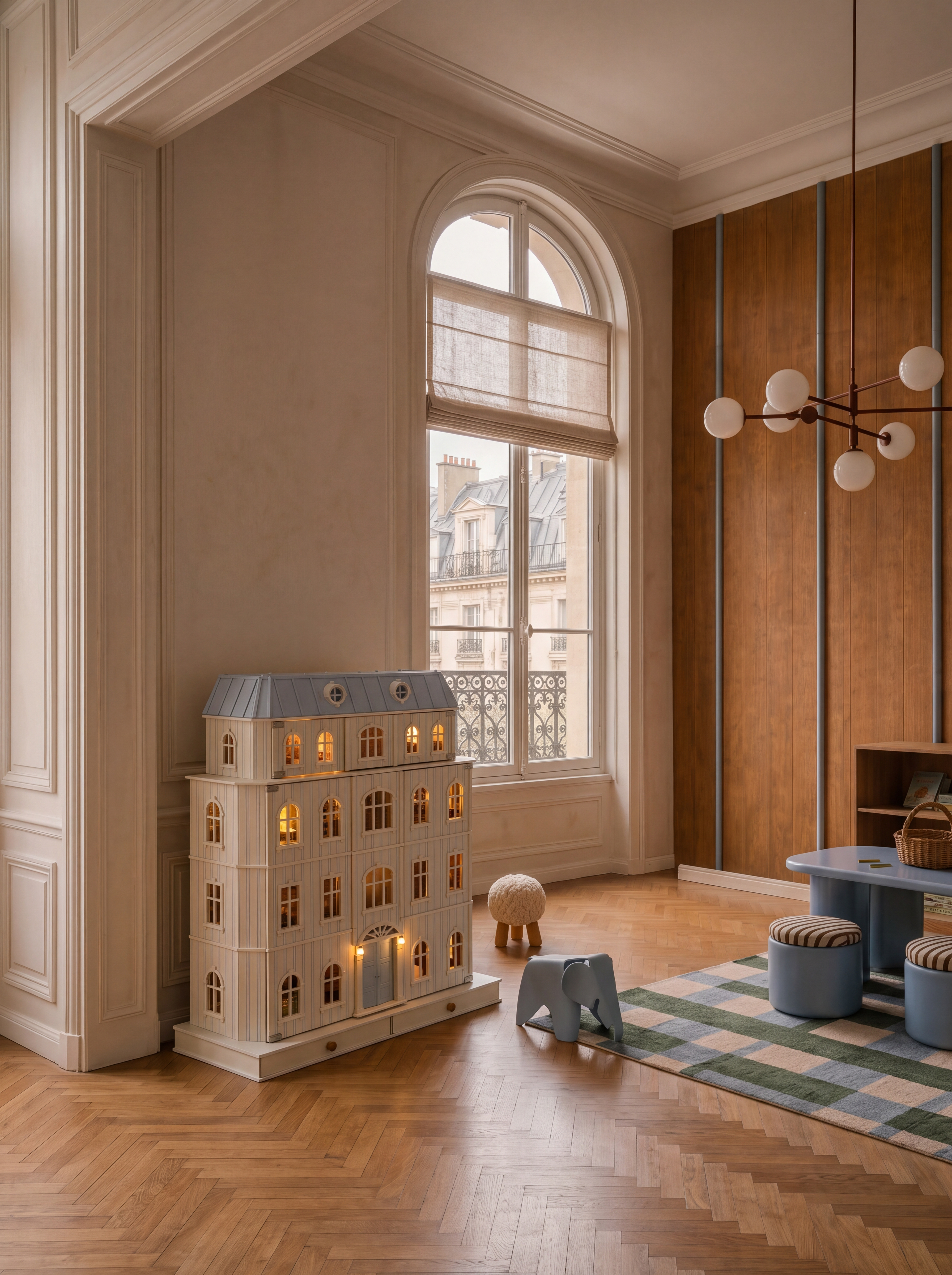
A smaller house can be a better choice for an apartment, shared bedroom or younger child. A large architectural house makes more sense when the family wants it to become a permanent room feature.
Do not judge size only by the number of storeys. A tall house with narrow rooms can provide less usable play space than a lower house with generous room dimensions.
4. Storeys vs Room Size: Bigger Is Not Always More Playable
Six storeys sounds more impressive than three. It does not automatically mean six-storey play will be better.
Look at the usable dimensions of individual rooms.
Can a child's hand comfortably enter the upper rooms? Can furniture be moved without everything else falling over? Are stairs consuming most of the floor area? Can two children reach the house at the same time?
Vertical houses can create wonderful movement and storytelling between floors, but generous room proportions can be equally valuable.
When comparing models, treat storey count and usable room size as separate specifications.
5. Check the Scale Before You Buy
A dollhouse can be beautifully made and still be wrong for the dolls a child already owns.
Collector miniature houses commonly use standardised scales such as 1:12. Children's dollhouses often use brand-specific proportions.
Measure a favourite figure and compare it with the house's doors, ceiling heights and furniture dimensions wherever specifications are available.
If you intend to mix furniture or characters from different collections, scale compatibility becomes even more important.
A house that works with the child's existing miniature world is more likely to be used for longer.
6. Use a Materials Checklist
The word 'wooden' does not tell you everything about a dollhouse.
Wooden houses may use solid timber, plywood, MDF or other engineered wood components, sometimes in combination. Different materials can be appropriate for different structural and decorative parts.
Before buying, check what the manufacturer actually specifies rather than assuming one material from the product title.
Then look beyond the core material: how are edges finished? How do walls and floors connect? What is used for windows, hardware, textiles and decorative details? Is safety or finish information clearly available?
A practical materials checklist is more useful than simply asking whether the house is wooden.
7. Ask About Paint, Finishes and Safety Information
Paint is part of the surface a child repeatedly touches.
Look for clear manufacturer information about finishes, age recommendations and applicable product safety testing or compliance for your market.
Avoid relying only on broad marketing phrases when more specific documentation is available.
If a brand uses the term 'non-toxic,' check what that claim refers to and whether supporting product information is available.
Safety standards vary by market and product, so current documentation should always take precedence over an old review or buying guide.
8. Furnished or Unfurnished?
A furnished house is usually easier to begin playing with immediately.
An unfurnished house offers more freedom for collectors or families who already own compatible miniature furniture.
Neither is inherently better.
The important point is to compare the final cost. A less expensive empty shell may become more expensive once beds, seating, kitchen furniture, textiles, characters and lighting are added.
Little Forest Animals' major architectural houses are designed as furnished miniature worlds, with furniture and textile sets included on current product pages for models such as House of Paris and House of Monaco.
When comparing budgets, compare finished worlds with finished worlds.
9. Look for Furniture That Can Move
Fixed interiors photograph beautifully, but movable furniture gives a child more control over the space.
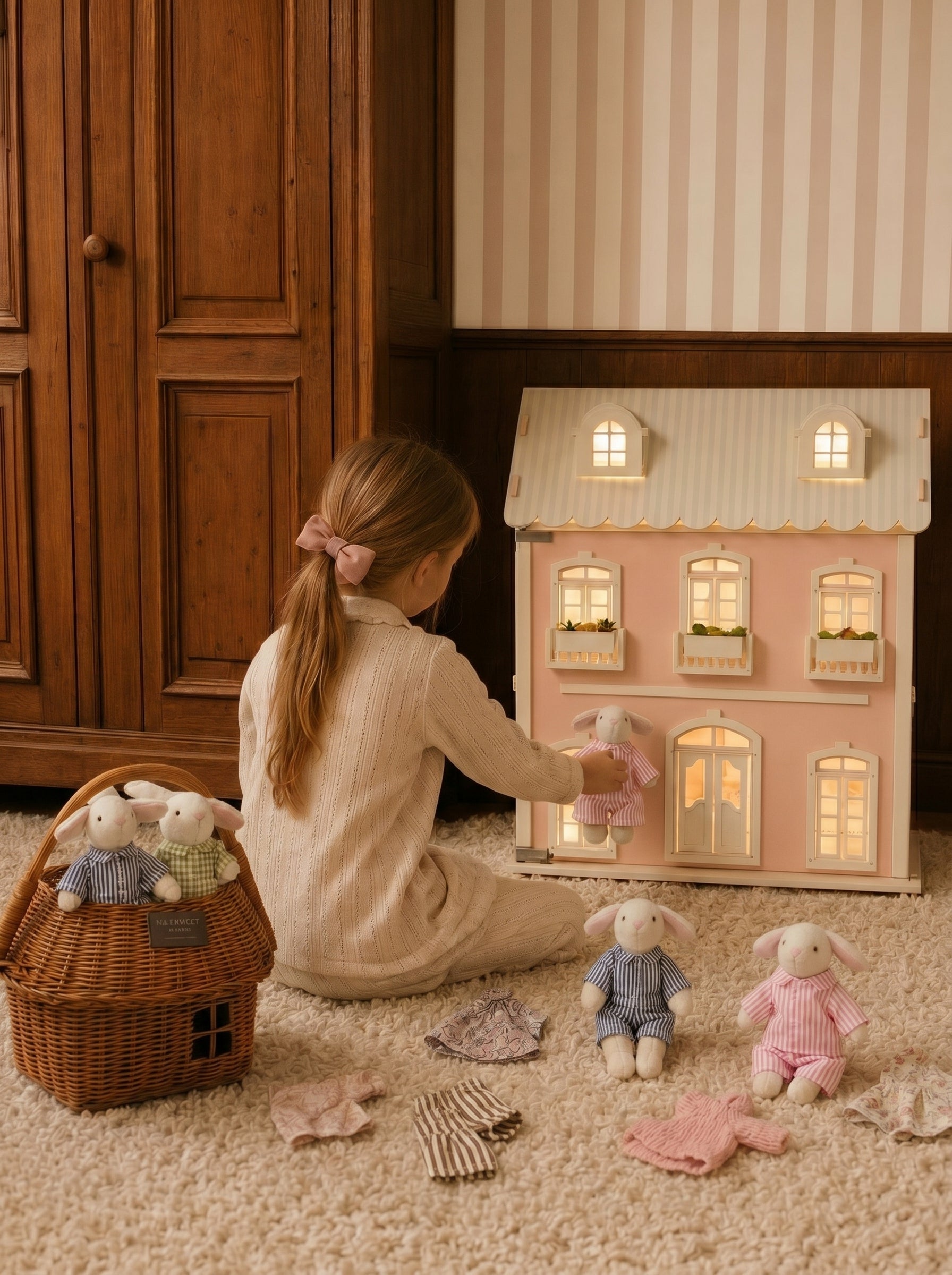
A bed can move upstairs. A kitchen can become a shop. A living room can disappear entirely.
This matters for longevity because the same architecture can support different arrangements as the child's interests change.
Open-ended interiors are less dependent on one predetermined story.
The house provides the structure; the child keeps redesigning what happens inside.
10. Spares and Repair Matter More Than Most Buyers Expect
If you want a dollhouse to last generations, ask what happens when something goes wrong.
Can a damaged component be replaced? Can hardware be tightened? Can furniture be repaired? Is customer support still likely to exist after the initial purchase?
Repairability is one of the clearest differences between an object designed for longevity and one designed around replacement.
Current Little Forest Animals major product pages state that replacement parts are provided when an item arrives damaged. Any broader long-term repair or spare-parts promise should be checked against the current service policy before publication.
A generational object does not have to remain perfect. It needs a realistic way to remain usable.
11. Think About Assembly Before Delivery Day
Large dollhouses can involve significant assembly.
Check whether the house arrives fully assembled, partially assembled or flat-packed. Look at estimated assembly complexity, required tools and the weight of major components.
For a birthday or holiday reveal, do not assume the box can be opened five minutes before the child enters the room.
Assembly is also relevant to future moving and storage. A house that can be safely disassembled may be easier to move between homes than one that becomes a permanently fixed structure.
Follow the manufacturer's assembly instructions rather than repeatedly dismantling a product not designed for it.
12. Choose Architecture That Will Not Visually Expire
Longevity is not only structural.
A dollhouse can remain physically intact and still feel visually tied to a short-lived trend.
Timeless design does not mean plain design. It means the house has enough architectural identity to remain interesting when colours, characters and room trends change.
Little Forest Animals uses city and architectural references across its houses, allowing the building itself to function as part of the room rather than only as a toy.

This becomes increasingly important if the family hopes the house will remain visible after the child's period of daily play.
13. Set a Budget Band — Then Compare Total Cost
Dollhouses exist at radically different price points.
Budget models can provide a simple first house. Mid-market wooden houses often add painted detail and basic furniture. Premium houses may emphasise materials, design and accessories. Luxury architectural houses can cost several thousand dollars and are closer to major furniture or heirloom purchases.
Choose the category before comparing individual models.
Then calculate total cost: house, furniture, characters, lighting, delivery and any taxes or duties not included.
A $200 empty house and a $300 furnished house are not necessarily $100 apart once the rooms are complete.
14. A Simple Budget Framework
Entry level: prioritise stability, appropriate age guidance, access and scale. Decorative complexity is secondary.
Mid-market: compare furniture inclusion, finish quality, room layout and brand support.
Premium: add design, material transparency, accessory quality and longer-term visual appeal to the checklist.
Luxury / heirloom: assess architecture, craftsmanship, full furnishing, repair/support, physical placement and whether the family genuinely wants the object to remain in the home for years.
Collector: prioritise standard scale, customisation, construction method and compatibility with miniature ecosystems.
The right budget band is the one that matches how the house will actually be used.
15. Consider Where It Will Live Five Years From Now
This is one of the most useful questions in the entire dollhouse buying guide.
Imagine the house after the child is older.
Would it still work in the bedroom? Could it move into a playroom, landing or family room? Is it beautiful enough to remain visible? Could it become a miniature display or keepsake?
A dollhouse that can change roles has a better chance of being kept.
Longevity does not require a child to play with the same object forever.
It requires the object to remain worth owning when the way it is used changes.
16. The Generational Dollhouse Checklist
Before buying, check the following: appropriate age guidance; room and doorway scale; overall dimensions; usable room size; materials; finish information; furniture inclusion; movable components; assembly; customer support; spare or replacement-part policy; care instructions; total cost; and whether the design can remain relevant outside a nursery or playroom.
If a house performs well across most of those questions, it has a stronger foundation for longevity.
Whether it actually becomes an heirloom will depend on something no buying guide can guarantee: the memories a family attaches to it.
Final Advice: Buy for Use First, Heirloom Potential Second
It is tempting to choose an heirloom object as though it already belongs in the future.
But children live in the present.
The best generational dollhouse should first be suitable, accessible and enjoyable now. Durability, repairability and timeless design then give it the possibility of a second life later.
That is how to choose a dollhouse that can last.
Not by protecting it from childhood.
By choosing one well enough made and well enough designed to survive having a childhood happen inside it.
Quick Dollhouse Buying Checklist
FAQ: How to Choose a Dollhouse
How do I choose a dollhouse?
Start with the child's age and figures, then compare scale, room access, materials, furniture inclusion, assembly, repair support, total cost and the physical space available at home.
What age is best for a dollhouse?
There is no single ideal age. Follow the manufacturer's age guidance and consider accessory size, accessibility and the individual child's interest. Dollhouse play can continue well beyond preschool years, while detailed miniature houses may also appeal to older children and adults.
What size dollhouse should I buy?
Measure the intended location and leave space for the child to sit or kneel in front of the house. Also compare room dimensions with the figures and furniture that will be used inside.
How many storeys should a dollhouse have?
More storeys are not automatically better. Compare usable room size, reach and access. A lower house with generous rooms may be more practical than a very tall house with narrow interiors.
Is a wooden dollhouse better than a plastic dollhouse?
Material alone does not determine quality. Wooden houses can offer weight, architectural detail and long-term visual appeal, while other materials can have practical advantages. Compare construction, finish, safety information, use case and longevity.
Should I buy a furnished dollhouse?
A furnished house is convenient and can make the total purchase easier to understand. An unfurnished house can be better if the child already owns compatible furniture or the buyer wants to customise it.
What makes a dollhouse likely to last generations?
Durable construction, timeless design, maintainability, access to support or replacement components and a format that can change from active toy to display or keepsake all improve its chances of being kept.