
Luxury Playroom Ideas: How to Create a Beautiful Space Built to Last
The best luxury playroom ideas start by admitting something most rooms never have to: a playroom has to change constantly, hour to hour, while still feeling coherent.
One morning it is a building site. By afternoon it is a reading room, a miniature town, an art studio or a home for an entire family of animals. It has to make space for all of that movement without ever feeling temporary.
Luxury, in this context, is not about filling a room with expensive things. It is about choosing fewer, better elements: thoughtful storage, natural materials, a comfortable floor, accessible shelves and play objects that can remain meaningful as a child grows.
The result is a room that looks considered to an adult but still belongs completely to the child.
Here are the principles we would use to create a beautiful playroom built for real life - and built to last.
1. Design the Room Around How Children Actually Play
A beautiful playroom begins with observation rather than decoration.
Children rarely use a room in the neat categories adults imagine for it. Books migrate to the floor. Animals move into dollhouses. Blocks become furniture. A rug becomes an island, a road or an entire imaginary country.
Instead of fighting that movement, design around it.
Keep the centre of the room relatively open. Place storage around the perimeter. Give larger play objects a permanent home. Create one or two quieter corners for reading or drawing.
This approach creates a stronger playroom aesthetic because the room has structure without becoming rigid.
In designer children's rooms, the most successful layouts often feel simple at first glance. The complexity comes from what children are able to do within them.
2. Use Rug Zoning Instead of Filling the Room With Furniture
A rug is one of the most useful architectural tools in a playroom.
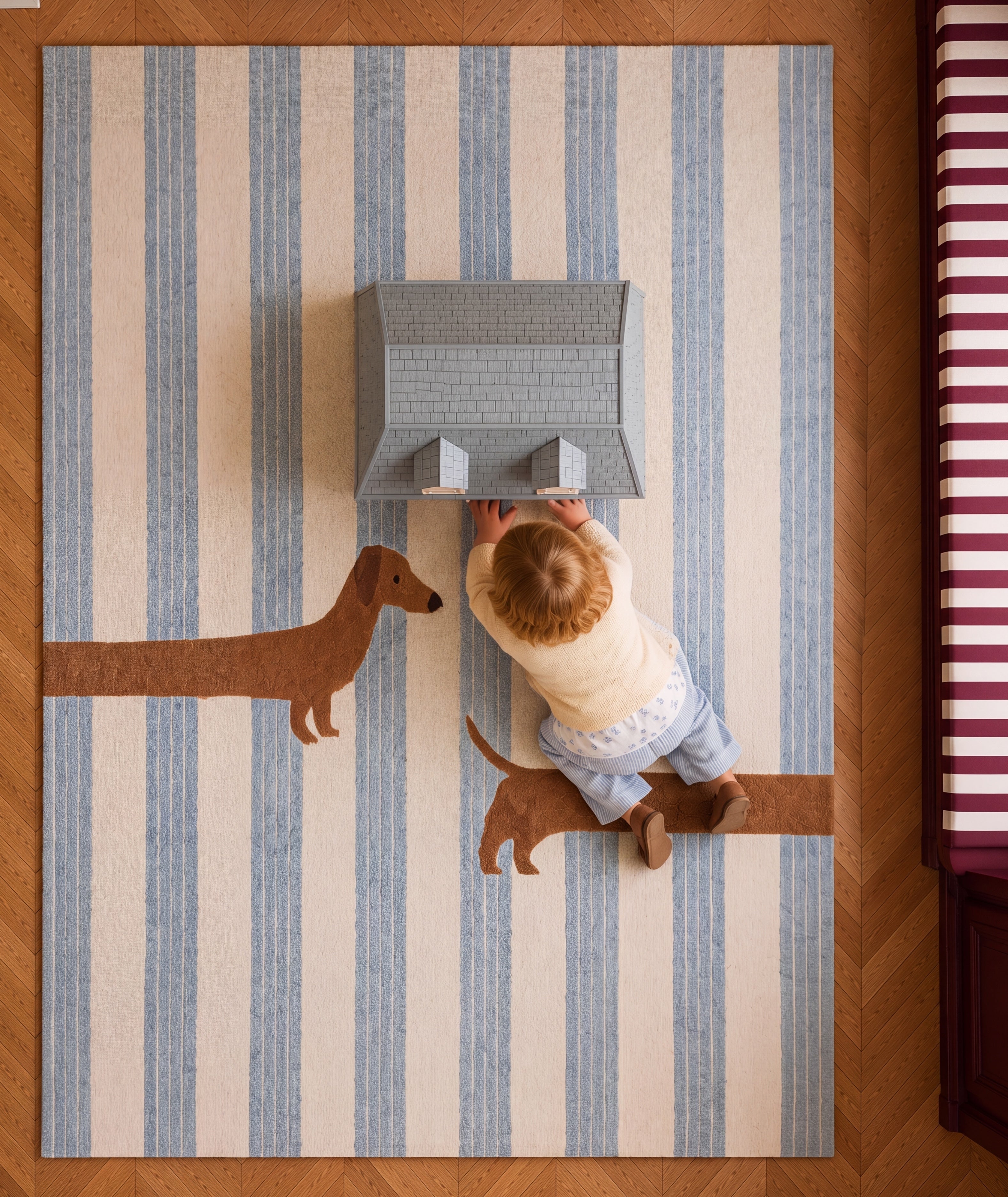
Rug zoning creates a visual boundary without building a physical one. It can define the main play area, soften the floor and make an otherwise open room feel intentional.
For younger children, the floor is effectively another piece of furniture. It is where puzzles are assembled, books are opened, miniature worlds are built and long stretches of screen-free play happen.
Choose a rug for the room rather than for a single age. A graphic pattern, restrained palette or tactile surface can work beneath toddler toys today and a reading chair or desk years later.
This is particularly important in a luxury playroom: the rug should support play without visually announcing that the room has an expiry date.
3. Balance Open Shelving With Hidden Storage
Not every toy needs to be visible.
One of the simplest ways to create a calmer playroom is to divide storage into two categories: objects worth seeing and objects that are easier to live with behind a door or inside a basket.
Open shelving works beautifully for books, wooden toys, animal families, miniature objects and a small number of frequently used materials. Closed storage can absorb puzzles, craft supplies, loose pieces and the inevitable accumulation of everyday play.
This balance makes tidying easier for adults while keeping choices understandable for children.
It also borrows one useful principle often associated with a Montessori playroom: accessible objects displayed with enough space for a child to see and choose them independently.
The goal is not to reproduce a classroom or follow a strict system. It is simply to make the room legible.
A shelf with six inviting possibilities is often more usable than a shelf containing sixty.
4. Let Beautiful Toys Stay Visible
The easiest way to create a sophisticated playroom is not to hide every sign of childhood.
It is to choose some play objects that contribute positively to the room.
Wooden toys have a particular advantage here. Their material already relates naturally to furniture, flooring and cabinetry, which allows them to sit comfortably in a considered interior.
A wooden toys aesthetic does not require every object in the room to match. In fact, rooms become more interesting when there is variation in form, scale and origin.
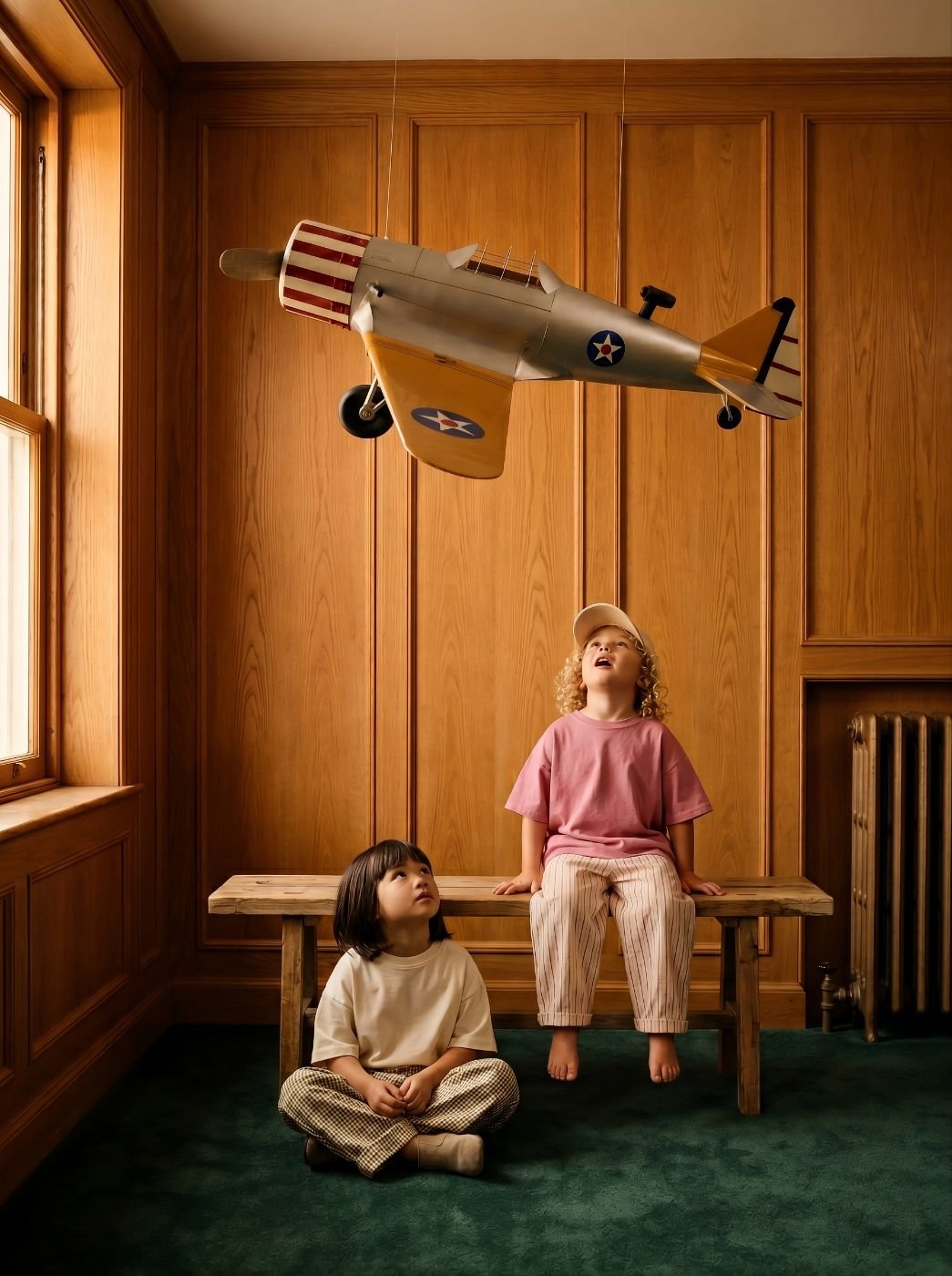
A hand-crafted animal, a miniature chair, a wooden vehicle or an architectural dollhouse can all remain on display without turning the room into a showroom.
The distinction is important: children should still be able to touch everything. Beautiful does not have to mean precious.
5. Build a Doll House Play Room Without Turning the Whole Space Into a Theme
A dollhouse can become the anchor of a playroom without requiring everything around it to become miniature or decorative.
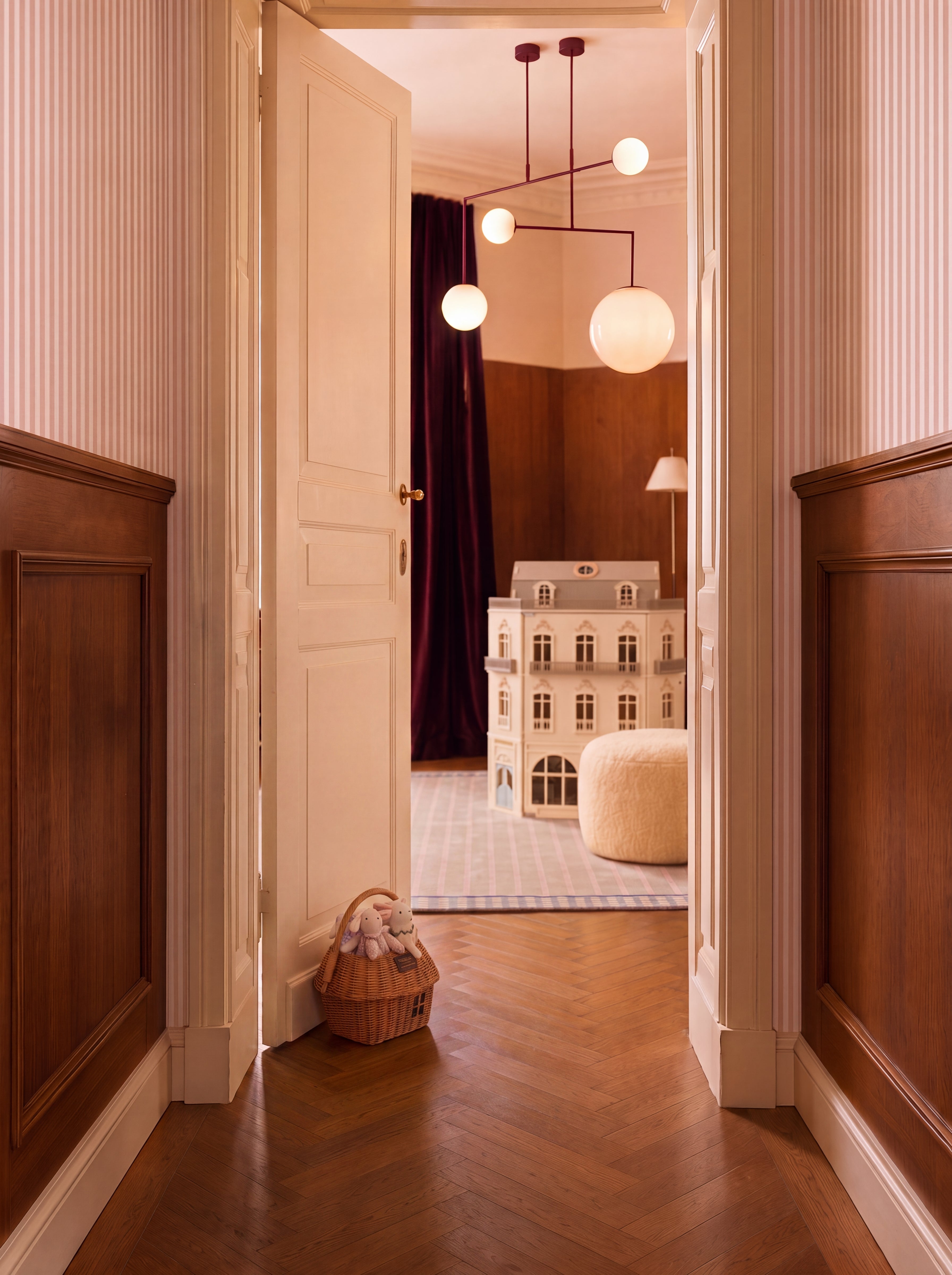
In a doll house play room, give the house enough physical space to function properly. Children need room to sit in front of it, open doors, move furniture and bring other characters into the story.
Then allow the surrounding interior to remain relatively quiet.
A rug can establish the play zone. Low storage can hold additional furniture and figures. Animal families can live on an accessible shelf nearby. Books can provide unexpected extensions to the stories happening inside the house.
This creates a miniature world without creating a themed room.
It also gives a substantial dollhouse the chance to function as both a play object and part of the interior - something that can remain visible when the room is tidy rather than being pushed away.
6. Build for Screen-Free Play Without Making Screens the Enemy
A good playroom makes alternatives easy.
Instead of treating screen-free play as a rule, design a room that naturally invites other kinds of attention.
Keep books within reach. Leave enough floor space to build. Make art materials easy to access and easy to put away. Give dolls, animals and miniature objects somewhere permanent to live. Rotate a small number of toys rather than displaying everything at once.
Open-ended objects are particularly useful because they do not prescribe one outcome. The same wooden animal can belong to a farm, visit a dollhouse or become a character in a completely invented world.
Screen-free spaces work best when children do not need an adult to set up the activity every time.
The room itself should quietly say: there is something here you can begin.
7. Borrow the Best Ideas From Montessori - Without Designing a Montessori Showroom
The popularity of the montessori playroom has introduced several useful design ideas into family homes: child-height storage, independence, limited choices, natural materials and order that children can understand.
Those principles can work beautifully in a more layered or luxurious interior too.
Low shelving can be made from warm timber rather than brightly coloured plastic. Baskets can organise small objects. Artwork can be hung at a child's eye level. A reading corner can be comfortable without becoming visually busy.
The important idea is accessibility.
A beautiful room loses much of its purpose if the child constantly needs permission or adult help to use it.
Design should support independence while still allowing the space to feel like part of the wider home.
8. Choose Objects That Can Change Roles
The longest-lasting children's objects are rarely limited to one function or one age.
A basket moves from blankets to toys to books. A rug moves from crawling space to reading zone. A low table becomes an art table and later a place for homework.
Play objects can evolve too.
A carefully made dollhouse may begin as a centre for imaginative play and later become a permanent decorative feature. Animal characters can move between different miniature worlds. Collectible wooden objects can gradually become part of a shelf display.
This is the idea behind longevity in a playroom: not keeping the room unchanged, but choosing elements capable of changing with it.
The room grows because the child grows.
9. Make Storage Part of the Architecture
Storage should not feel like an apology for having toys.
Built-in cabinetry, low cupboards, benches with concealed storage and well-proportioned baskets can become part of the architecture of the room.
Use closed storage for visual noise and open storage for objects that invite play.
Where possible, keep frequently used objects at child height. Higher shelves can hold less frequently used items, keepsakes or objects that are gradually becoming more decorative than playful.
This layered approach prevents the room from becoming either sterile or chaotic.
It also means the playroom can be reset relatively quickly - an underrated form of luxury in a busy family home.
10. Leave Space for the Room to Become Something Else
The best playroom is not necessarily a room that looks like a playroom forever.
Children's needs change quickly. A large floor area used for building at five might need a desk at nine. A reading nook may become a music corner. Toy shelving may gradually hold books, collections and personal objects.
For that reason, avoid making every major design decision age-specific.
Choose cabinetry, flooring, lighting and larger furniture with the same care you would use elsewhere in the home. Let the smaller layers communicate childhood.
This is what makes the room genuinely built to last. Its identity can change without requiring its foundations to be replaced.
What Makes a Playroom Feel Luxurious?
Luxury is often confused with abundance.
In a children's room, abundance can quickly become noise.
A more enduring form of luxury comes from space, craftsmanship and thoughtfulness: enough room to play comfortably, storage that works, materials that feel good to touch, a rug worth sitting on and objects that do not need to be thrown away when the next birthday arrives.
Designer children's rooms often succeed because they treat children's spaces with the same seriousness as adult interiors - while remembering that play is the purpose.
The room should photograph beautifully, certainly.
But more importantly, it should work beautifully on an ordinary Tuesday afternoon.
A Beautiful Room Should Still Look Like Childhood
There is a temptation, particularly with neutral children's interiors, to remove so much visual noise that childhood disappears with it.
That is not the goal.
A luxury playroom can contain colour, unfinished games, favourite books, animal families and evidence of whatever story happened that morning.
The framework can be calm while the play remains exuberant.
Use storage to create order, rug zoning to create structure, open shelving to create independence and natural materials to create visual continuity.
Then leave room for imagination to disrupt all of it.
Because the strongest luxury playroom ideas do not create rooms children are afraid to disturb.
They create beautiful rooms designed to be used.
FAQ: Luxury Playroom Ideas
How do you make a playroom look luxurious?
Focus on thoughtful materials and layout rather than quantity. Natural wood, a well-chosen rug, integrated storage, considered lighting and a smaller selection of beautiful play objects can make a playroom feel sophisticated while remaining practical.
How do you create a timeless playroom?
Keep the permanent elements flexible. Choose neutral or restrained foundations for flooring, cabinetry and larger furniture, then allow books, toys, art and textiles to provide colour and personality.
What is the best storage for a luxury playroom?
A combination of open and closed storage works well. Open shelves keep selected books and toys accessible, while cupboards, drawers and baskets hide smaller pieces and visual clutter.
What is rug zoning in a playroom?
Rug zoning uses a rug to visually define an activity area without walls or additional furniture. In a playroom, it can establish a comfortable central zone for floor play, reading or miniature worlds.
Can Montessori ideas work in a luxury playroom?
Yes. Child-height shelving, accessible materials, limited visible choices and natural materials can be incorporated into many interior styles without creating a strictly Montessori room.
How can you encourage screen-free play at home?
Make non-screen activities easy to begin independently. Keep books, open-ended toys, art materials and imaginative-play objects accessible, while maintaining enough clear floor or table space for children to use them.
How do you design a doll house play room?
Give the dollhouse a permanent position with enough floor space for children to sit and play comfortably. Keep related figures and accessories nearby in low storage, and use a rug to visually connect the play zone to the rest of the room.