
Article: The Things Childhood Keeps
The Things Childhood Keeps
Children notice more than we think.
Long before a child can explain why they love a place, they have already decided how it feels.
They know where the morning light arrives. They know which corner is best for stories. They know the sound of someone coming up the stairs. They know that one particular character belongs beside the bed and nowhere else.
Adults tend to think of childhood as something children are moving through.
To a child, it is not a stage.
It is the whole world.
And before they know anything about design, craftsmanship or what makes something worth keeping, they are already forming attachments to the places and objects around them.
Perhaps this is where our idea of home begins.
Not with an understanding of architecture.
With a feeling.
The First World We Know Is Home
Before there are schools, cities, journeys and homes of their own, there is the first world.
A bedroom.
A hallway.
A familiar staircase.
The view from a window.
The place where books are kept.
Children learn these landscapes by heart.
Years later, we may struggle to remember exactly what was in those rooms. Yet we remember something harder to describe.
The atmosphere.
The scale of everything.
The feeling that the hallway was impossibly long or that the space beneath a table was large enough to become somewhere else entirely.
Childhood has a different geography.
Small places can contain enormous worlds.
This idea of creating a room that remains meaningful as childhood changes is also at the heart of designing a nursery that grows with the child.
The best children's spaces are not simply designed for a particular age.
They become part of the child's understanding of home.
Childhood Has a Culture of Its Own
Every childhood develops customs no adult could have planned.
A story that must be read in precisely the same way.
A particular seat at breakfast.
A made-up word everyone in the family eventually starts using.
A little character with a name, a voice and a history far more complicated than anyone outside the room could understand.
There are rituals and rules.
There are recurring jokes.
There are imaginary places with surprisingly detailed histories.
Most of this culture is never recorded.
It simply exists for a while.
Then the child grows, and gradually the rules disappear.
Perhaps this is why finding an object from childhood can feel so powerful.
It is evidence of a world that once existed completely and now survives mostly in memory.
The characters themselves often become part of that private world. The Little Forest Animals residents begin as characters, but what happens to them afterwards belongs entirely to the child.
Beauty Begins Before We Have a Word for It
A child does not need to know why something is beautiful in order to respond to it.
They notice shape.
They notice scale.
They notice balance and character.
They notice that one place feels inviting while another does not.
We learn the vocabulary later.
The experience comes first.
This is one reason we believe children's surroundings deserve genuine thought.
Not because childhood needs to be perfected.
And certainly not because every object around a child needs to be precious.
Quite the opposite.
A beautiful childhood room should still be lived in.
Books should be left open.
Things should move.
Collections should appear in unexpected places.
A room becomes meaningful through life, not through perfection.
Beauty simply gives that life a thoughtful place to begin.
Imagination Begins Where Certainty Ends
Adults like finished things.
Children are often more interested in possibilities.
A cardboard box can be more compelling than the thing that came inside it.
A staircase can become a mountain.
A row of chairs can leave for another country.
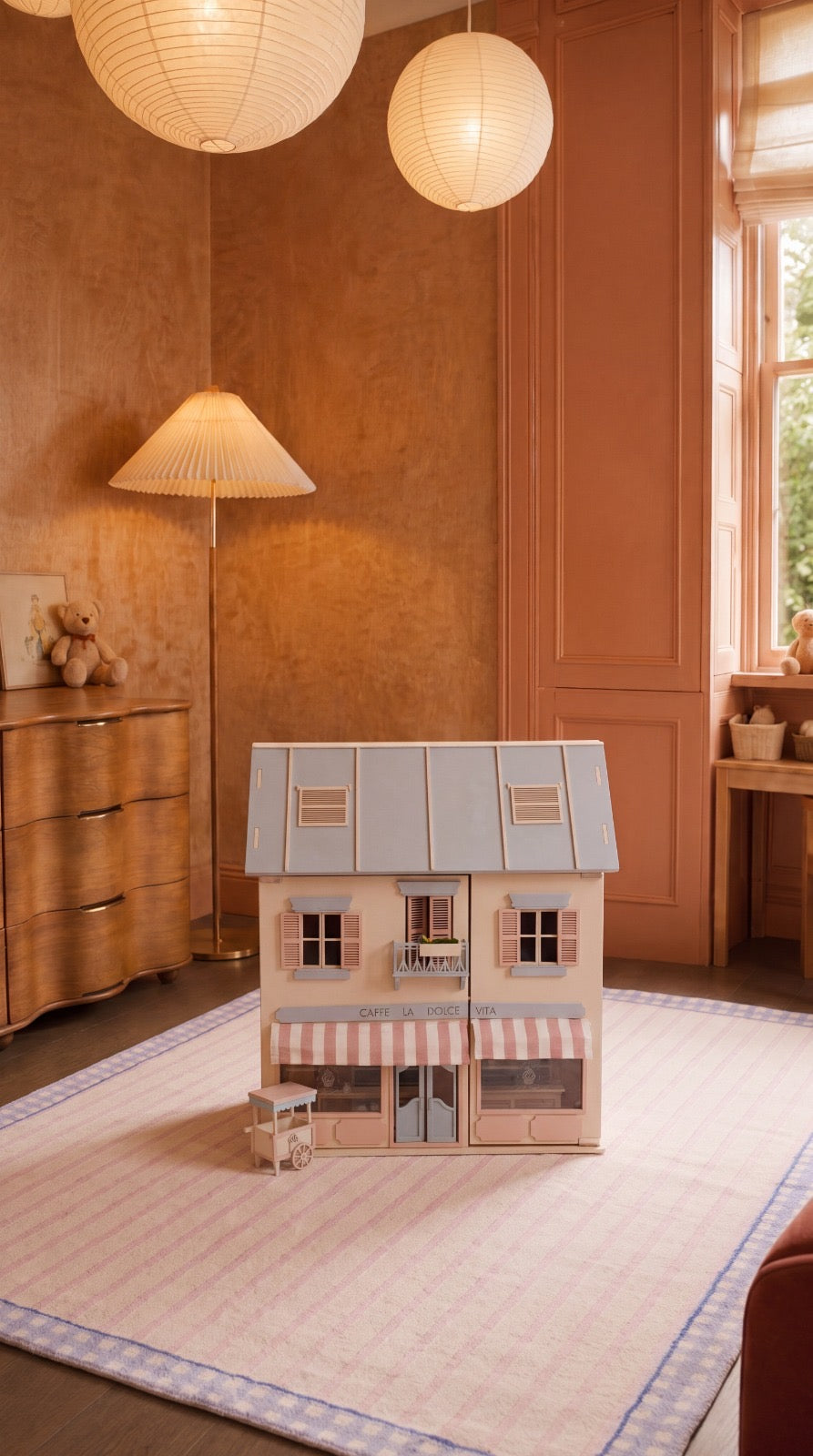
A dollhouse can become almost anything because it does not insist on one particular story.
This is the quality we return to again and again at Little Forest Animals.
The best objects for imaginative play do not perform for the child.
They wait.
They leave something unanswered.
Who lives here?
Where are they going?
What happened yesterday?
What happens next?
The child supplies what is missing.
And in doing so, transforms an object into something that could never have been designed in advance.
A world of their own.
Children Make Things Theirs
There is a particular moment when an object stops belonging to the person who chose it.
You recognise it because your intentions no longer matter.
You may have imagined where it would go.
How it would look.
Perhaps even how it would be played with.
The child sees something else.
A house acquires inhabitants.
Characters develop histories.
Rooms are given purposes nobody anticipated.
Eventually, the names given by adults become almost irrelevant.
It is no longer the dollhouse.
It becomes:
My house.
Her room.
Where the baby sleeps.
Where they live.
This transformation matters.
We can choose the object.
We can decide how it begins.
But we cannot decide what it becomes.
That belongs to the child.
It is also why spaces created for play work best when they leave room for change. A beautiful playroom built to last is not one in which everything remains perfectly arranged.
It is one that can absorb the child's changing world without losing its own character.
We Cannot Choose What They Will Remember
Parents make hundreds of choices about childhood.
The books.
The rooms.
The birthday cakes.
The holidays.
The things carefully saved in boxes.
But memory is wonderfully disobedient.
The grand occasion may disappear completely.
An ordinary Tuesday may remain forever.
A child may forget the expensive gift and remember the tiny animal that came everywhere for three years.
They may remember the sound of the kitchen in the morning.
A certain window.
The way their bedroom looked from the floor.
We cannot manufacture nostalgia in advance.
And we should not try.
All we can do is create a world worth inhabiting while it is here.
The remembering comes later.
Some Objects Grow Quieter Instead of Disappearing
Most children's things eventually complete their purpose.
They are loved, outgrown and passed on.
But occasionally an object follows a different path.
It does not disappear when play changes.
It simply becomes quieter.
Something once carried through the house every day begins to sit on a shelf.
A miniature world once filled with constant stories becomes part of the room itself.
Years pass.
And instead of becoming less meaningful, the object begins to hold something new.
Memory.
This is what makes the idea of an heirloom so interesting.
An heirloom is not simply an object made to last.
Longevity alone is not enough.
It has to have been there.
It has to have participated in family life.
It has to carry evidence — visible or invisible — that somebody once loved it.
 Families Inherit Stories, Not Toys
When something is passed from one generation to another, the object is only half of the gift.
The other half is the sentence that comes with it.
This was yours when you were little.
You took this everywhere.
You used to spend hours with this.
This was always your favourite.
Those sentences change an object.
Suddenly it has a past.
And when another child begins a new story with it, two moments in a family's life meet without ever having happened at the same time.
This is why the things we keep are rarely valuable only because of what they are.
They are valuable because of what happened around them.
Families do not really inherit toys.
They inherit stories.
The object simply gives the story somewhere to live.
What Makes an Object Part of Childhood?
Perhaps it is not something we can decide in advance.
We can choose thoughtfully.
We can surround children with beauty.
We can give them objects designed to leave room for imagination.
But meaning cannot be manufactured.
It arrives through repetition.
Through ordinary afternoons.
Through stories told more than once.
Through an object being carried from one room to another until nobody remembers when it first became important.
This is the difference between an object that simply belongs in a child's room and one that becomes part of childhood.
One occupies space.
The other acquires a history.
And history takes time.
One Day, the Room Will Be Different
There is no single moment when childhood leaves a room.
It happens quietly.
The books change first.
Then the clothes.
Certain things are played with less often.
Something that once had to be found before bedtime has not been looked for in months.
And one day you notice that the room has become still in a way it never used to be.
Nothing is wrong.
This is what growing is.
But the ordinary objects left behind suddenly seem capable of holding an extraordinary amount of time.
They remember the afternoons we were too busy to realise were temporary.
The voices we heard from the next room.
The invented worlds we only half understood.
The version of a child who existed for such a short while and yet somehow changed the house forever.
This is what we think about at Little Forest Animals.
Not simply what children play with.
What surrounds their first understanding of beauty.
What gives imagination somewhere to go.
What becomes theirs rather than remaining ours.
What earns a place in family memory.
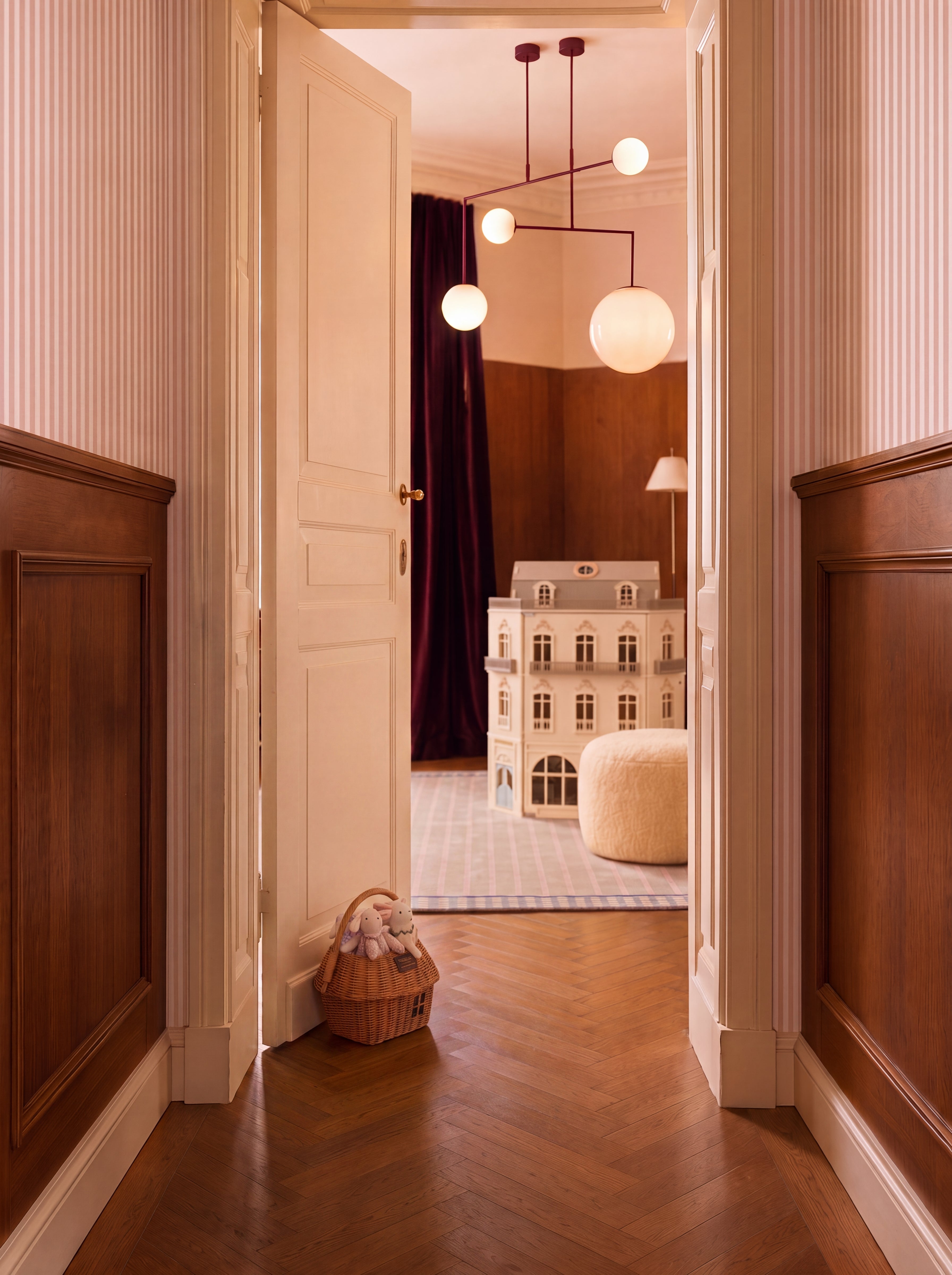
And what, many years from now, might make someone open a door to a room they thought they had forgotten.
Childhood does not ask to be preserved.
Only lived well enough to be remembered.
FAQ: Childhood, Imagination and the Objects We Keep
Why are childhood spaces so important?
A child's earliest rooms are among the first environments they learn intimately. Bedrooms, nurseries and play spaces become associated with routines, imagination, family life and a child's developing understanding of home.
Why is imaginative play important in a child's environment?
Imaginative play gives children space to create their own characters, relationships and stories. Open-ended objects can support this by suggesting possibilities without determining exactly how a child should play with them.
What makes a children's object worth keeping?
Longevity alone does not make an object meaningful. The objects families keep are often those connected to particular periods, routines and stories — things that gradually acquire emotional value through use.
What is an heirloom toy?
An heirloom toy is generally an object that remains meaningful beyond one period of childhood and may eventually be preserved or passed on. Its significance often comes as much from the family history attached to it as from the object itself.
How can you create a child's room that grows with them?
Begin with a space flexible enough to change. Rather than designing everything around one age or theme, allow books, artwork, play objects and personal collections to accumulate naturally as the child grows. For more ideas, explore our guide to luxury nursery design that grows with the child.
What does Little Forest Animals believe about childhood design?
We believe children's surroundings can be beautiful without being precious, imaginative without prescribing a story, and thoughtfully made without asking to be preserved. The most meaningful objects are ultimately given their value by the children and families who live with them.